


How to Create a Home Office That Actually Works
A home office that works is not primarily a question of equipment. The desk, the monitor, the chair, most people have those sorted. The harder problem is the environment: a room that feels like somewhere you want to sit for six hours rather than somewhere you feel obliged to. That is a materials question as much as a layout one, and it is where most home offices fall short.
Temperature and the working day
Cold is the most common and least discussed problem in home offices. A spare bedroom or converted room that is fine at midday is often noticeably cold in the morning and again in the late afternoon when heating cycles down. A cold room narrows focus and shortens the time you are willing to stay in it.
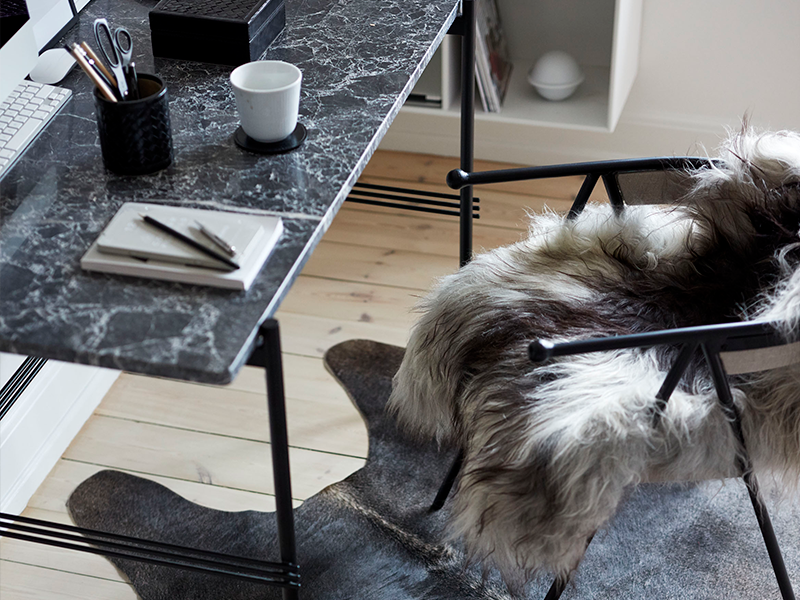
The practical responses are obvious, a better heater, better insulation. But the material quality of the room affects perceived temperature independently of the actual air temperature. Natural materials — wool, timber, leather — absorb and hold warmth rather than reflecting it. A sheepskin underfoot, a wool throw within reach, a timber desk surface all contribute to a room feeling warmer than the thermostat suggests.
A sheepskin seat pad addresses one of the most direct cold transmission points: the contact between the backs of the legs and a cold synthetic or leather seat. The difference on a cold morning is immediate.
Acoustics and concentration
Hard rooms with bare floors and walls are acoustically live. Every sound, keyboard, phone, traffic outside, reflects rather than absorbs. In a room you are in all day, the cumulative effect on concentration is real, even if you do not register it as an acoustic problem.

Natural textiles reduce this without requiring dedicated acoustic treatment. A sheepskin rug on a hard floor, a wool throw over a chair, books and soft objects on shelves — each absorbs a portion of ambient sound. None of these is a dramatic change individually. Together, they make the room quieter and easier to work in.
The thing most home offices get wrong
Most home offices are furnished for function and left at that. The result is a room that works adequately but does not feel like somewhere you want to spend time. For people working from home full-time, that distinction matters considerably more than it does for occasional use.
The fix is not expensive or complicated. A sheepskin beside the desk, a throw within reach, a rug that grounds the room, small additions that change the character of the space without structural change or significant cost. The room does not need to look like a showroom. It needs to feel like somewhere you choose to be.
What to choose
For the desk chair, a short-wool New Zealand seat pad at 90–100 cm. Dense pile, holds its shape, thermally effective throughout the day.
For the floor under or beside the desk, a single skin in a natural colour works better than a dyed one in a floor position, natural undyed skins do not fade in indirect light and the colour variation between hides is less noticeable underfoot. Short-wool for a contained look; long-wool if the room has space for it.
For a reading chair or secondary seating, a longer-pile skin or a throw. Icelandic long-wool earns its place here, for a chair used for thinking, reading, or calls rather than screen work, the deeper pile and more relaxed character are right.
For a standing desk position, a single short-wool skin directly underfoot. More effective than a foam mat for thermal regulation, more durable over time, better to look at.
Care
A sheepskin in a home office needs very little. Weekly shaking keeps the pile clear. Spot cleaning with a lanolin-based detergent handles marks. Air it occasionally near an open window on a dry day. For a seat pad in daily use, five minutes a week covers the routine.
Working with us
We supply sheepskin for home office use directly. If you have questions about sizing, pile type, or which product suits a specific use, get in touch — we are happy to advise before you order.
Email: hello@naturescollection.eu
Phone: +45 75 80 10 50
Read more
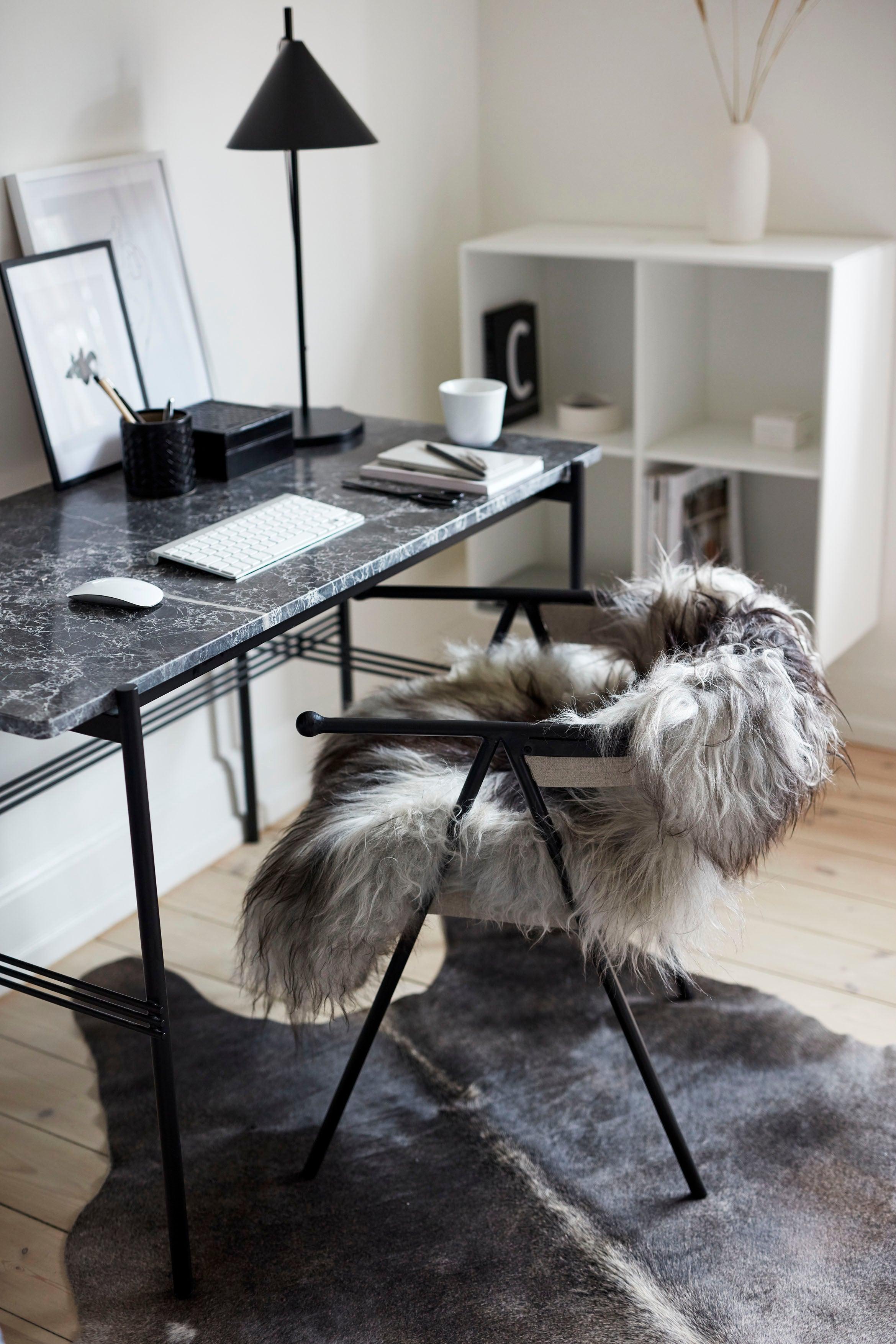
Bring natural warmth to the office
At NATURES Collection we have a large number of products made of natural skins, that are perfect for the office. Let us show you how amazing your office can be!
Read more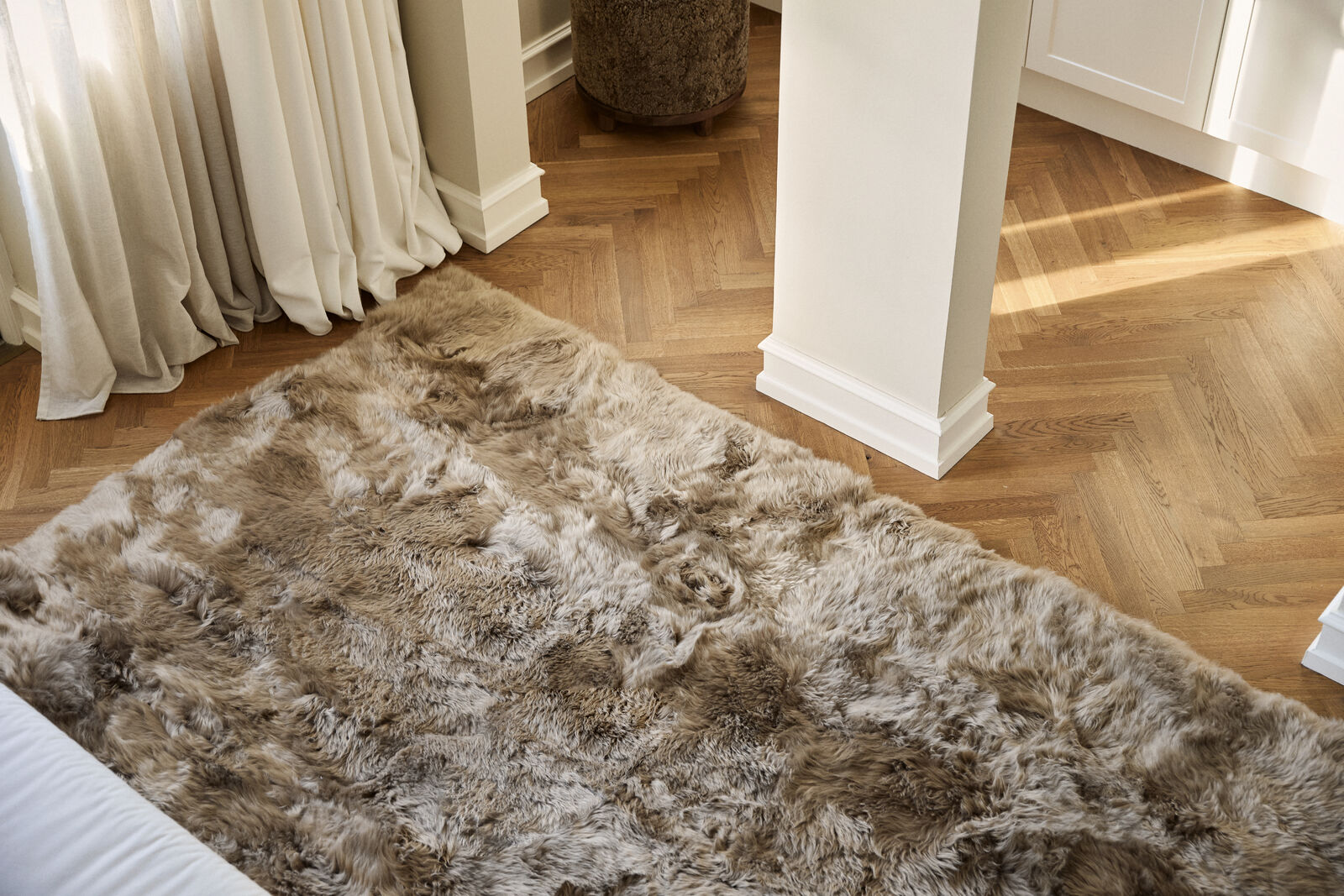
Sheepskin Standing Desk Mats: A Natural Alternative to Foam and Rubber
Standing desk mats are a category where most products solve one problem and create another. Rubber and foam anti-fatigue mats provide cushioning but trap heat, mark easily, and deteriorate visibly ...
Read more