


The Sheepskin Office Chair Guide: Comfort, Focus and Warmth
Most office chairs are designed around adjustability and lumbar support. What they rarely address is temperature. A leather or mesh chair that is cold when you sit down, clammy after an hour, and hard against the backs of the legs after two is a common experience in offices of every quality level. A sheepskin seat pad does not replace a good chair. It solves the problems a good chair does not.
If you want to discuss quantities for an office fit-out, contact details are at the end.
How it works
Wool fibres are hollow. They trap air and regulate temperature in both directions, warming a cold seat in winter, preventing the heat build-up that mesh and leather both produce in warmer conditions. For someone sitting at a desk for six or more hours, the difference between a seat that holds a comfortable temperature and one that does not is felt across hours, not minutes.
Lanolin, the natural oil in wool, is antibacterial and keeps the fibre soft over time. It also means the material breathes in a way synthetic seat pads do not. Foam and polyester trap heat and moisture. Sheepskin wicks both away.
The cushioning is secondary but still noticeable. On a hard or firm seat, the wool provides a layer of natural give that reduces pressure over a long working day.
Short-wool versus long-wool
For a primary desk chair in continuous daily use, short-wool New Zealand (2–3 cm) is the right choice. The lower pile does not interfere with seated posture, and the denser structure holds its shape and thermal properties over months of regular use without compressing.
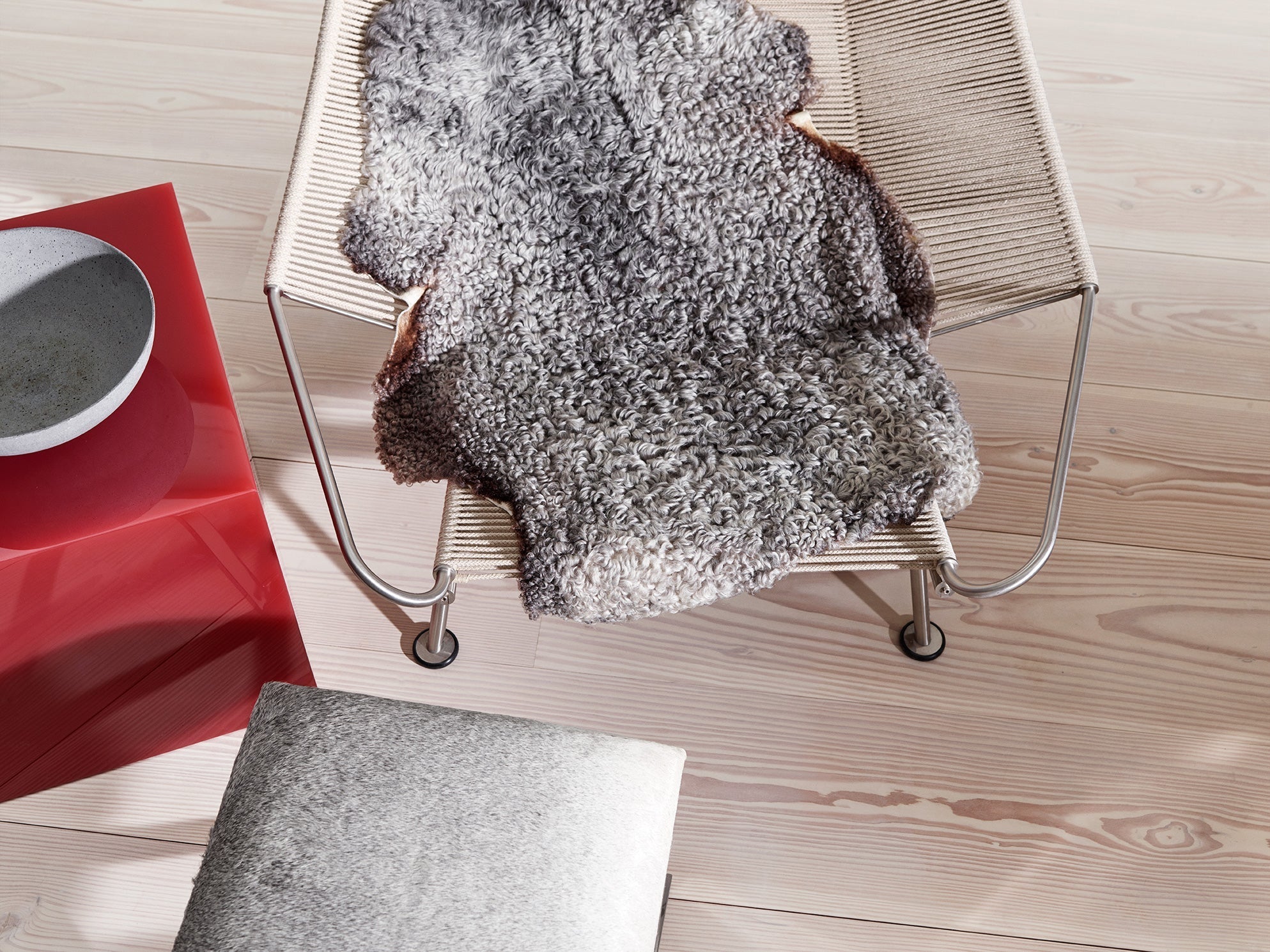
Long-wool New Zealand (5–7 cm) suits a secondary position, a meeting chair, a reading chair, a sofa in a breakout area, where sitting is less continuous and the richer texture fits the more relaxed context.
Flat seats versus contoured seats
A standard task chair with a flat, defined seat takes a sheepskin cleanly. The skin sits on the chair and drapes over the back edge; it stays in place during normal use without any fastening.
Heavily contoured ergonomic chairs or saddle-style seats are less straightforward. A flat pad on a pronounced contour can bunch or shift during use. For these chairs, draping a skin over the back rather than the seat, providing lumbar and upper back warmth rather than cushioning — is usually the more practical application.
Sizing
For a standard task chair, a 90–100 cm skin covers the seat and drapes over the back adequately. For a higher-back chair or where lower back coverage is wanted, 120 cm is the right size. For larger executive chairs, measuring the seat depth before ordering avoids surprises.
Care
Shaking the skin out weekly removes accumulated dust and restores the loft of the wool. Spot cleaning with a lanolin-based detergent handles most marks. Avoid machine washing for New Zealand sheepskin except as a last resort; avoid it entirely for other types. Airing occasionally near an open window refreshes the wool.
For a shared office with multiple seat pads, a simple care note in the cleaning protocol, shake weekly, spot clean as needed, is enough to keep pieces in good condition for two to three years of daily use.
Working with us
We supply sheepskin seat pads and throws for workplace use directly, including for office fit-outs and multi-desk orders. If you are speccing seating for a new office or refreshing an existing one, get in touch.
Email: hello@naturescollection.eu
Phone: +45 75 80 10 50
Read more
Sheepskin Standing Desk Mats: A Natural Alternative to Foam and Rubber
Standing desk mats are a category where most products solve one problem and create another. Rubber and foam anti-fatigue mats provide cushioning but trap heat, mark easily, and deteriorate visibly ...
Read more
Natural Materials in the Modern Office: Why What You Sit On Matters
Workplace wellbeing gets plenty of attention, but it tends to concentrate on the same variables: light levels, air quality, noise management, flexible working. The physical quality of what people s...
Read more