

Article: Sheepskin Throws for Glamping and Outdoor Hospitality

Sheepskin Throws for Glamping and Outdoor Hospitality
Glamping and outdoor hospitality have a specific problem: the physical environment is part of the product, and that environment is inherently variable. A bell tent, shepherd’s hut, or treehouse is sold on the quality of the experience it delivers, and that experience depends on the materials inside feeling genuinely warm and considered — not just styled for photographs.
Sheepskin is one of the better materials for achieving that in an outdoor hospitality context. This article covers where it works, what to specify, and how to manage it operationally. Contact details are at the end.
Why it works in this context
The appeal of glamping is warmth and comfort in a setting that would otherwise be cold and spartan. Sheepskin delivers on that because its warmth is functional, not decorative. Wool fibres regulate temperature, insulate from cold surfaces, and wick moisture. A guest wrapping themselves in a sheepskin throw on a cool evening is using a material whose properties a polyester blanket genuinely cannot match — and they will say so in a review.

In a natural, rustic setting — canvas walls, timber furniture, bare floors — a real sheepskin looks as though it belongs. A synthetic alternative reads as a prop. That distinction is more obvious to guests than operators sometimes assume.
What to specify and where
Beds. A sheepskin throw at the foot of the bed tends to be the first thing a guest notices on arrival and one of the details they mention most in reviews. New Zealand long-wool is the standard recommendation — dense enough to feel substantial, manageable for housekeeping to shake and air between guests. For a more rustic or nature-led aesthetic, Icelandic long-wool in natural tones has more individual character; for properties wanting a consistent look across multiple units, New Zealand in a natural or neutral dyed colour is the more reliable choice.
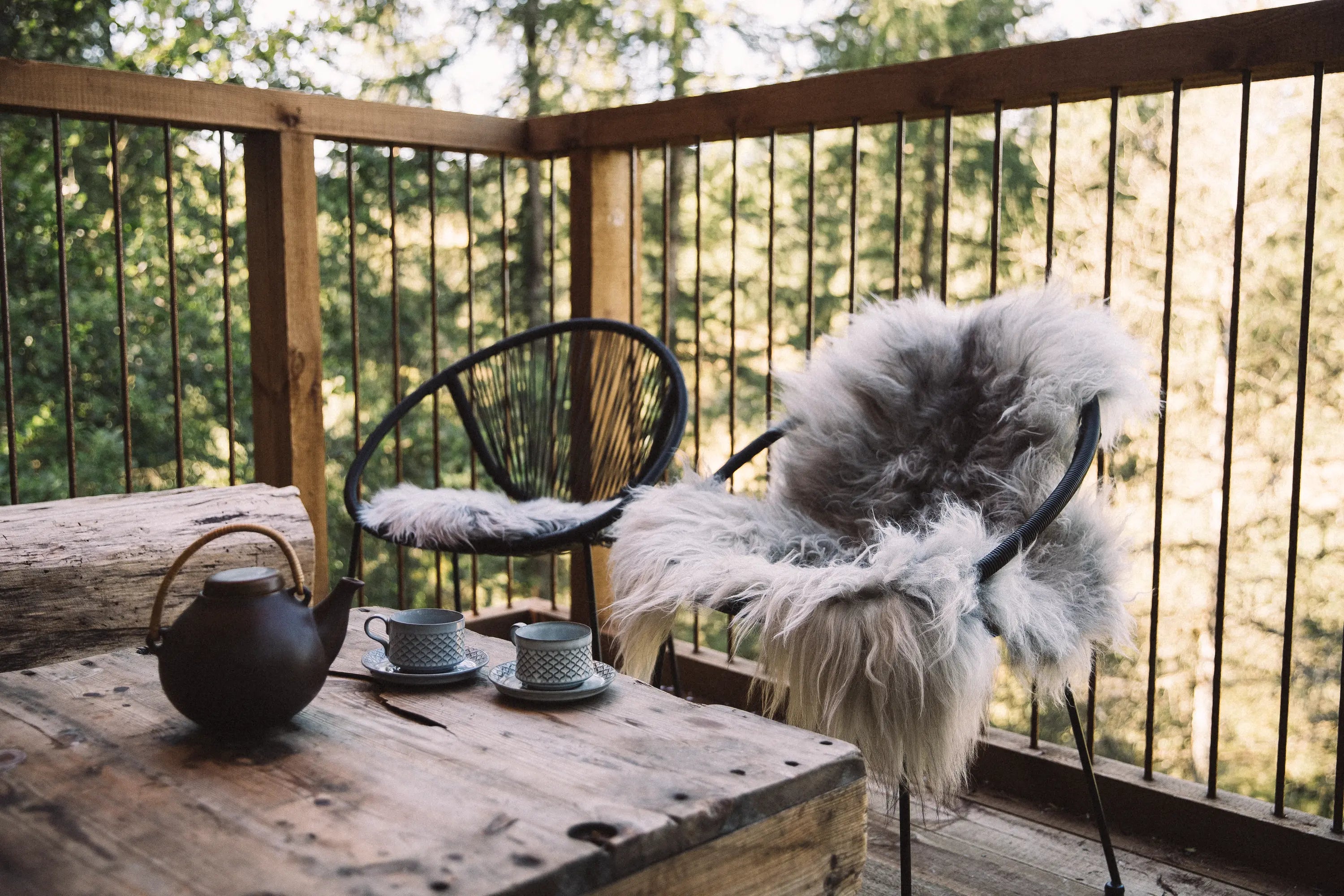
Seating areas. A skin draped over an armchair or wooden bench introduces warmth into a sitting area that would otherwise feel cold in the evenings. One or two pieces in a lounge or bell tent sitting area is enough — the effect does not require volume to work.
Outdoor seating. For fire pit areas, outdoor dining, and covered terraces, sheepskin throws over chairs and benches extend the usable evening. Guests who are warm stay outside longer, which matters for atmosphere and for any food and drink revenue attached to the experience. Natural undyed skins only for outdoor positions — dyed skins will fade in sunlight.
Floor rugs. In a bell tent or shepherd’s hut with a hard or bare floor, a sheepskin rug adds warmth underfoot and grounds the space visually. A single or double skin is usually sufficient; larger floor areas can be covered with multi-hide configurations.
Operations
Glamping operations typically run with smaller housekeeping teams and shorter turnaround times than hotels. The care protocol needs to be simple enough to execute consistently with limited time between guests.
Daily routine: shake, inspect, air if possible. For outdoor throws brought in at the end of service, shaking and hanging in a ventilated space overnight is enough. Spot cleaning with a lanolin-based wool detergent covers most marks. Machine washing should be avoided for all types except baby sheepskin.

For busy sites, rotation is worth building in. A small reserve — eight throws covering six active units, for example — allows each piece to air fully between turnarounds rather than going back on a bed still slightly damp. The guest does not notice; the pieces last longer.
Consistency and replacement
For properties with multiple units, consistent specification across all of them matters — particularly for properties that photograph and market their interiors. Order in a single batch from the same dye lot for dyed specifications, or agree on the acceptable range of natural variation for undyed at the outset. Replacing pieces individually over time is where inconsistency creeps in.
Outdoor and glamping use is harder on sheepskin than indoor residential use. Plan for replacement from the start and establish the specification with a supplier who can reorder against it consistently, rather than treating it as a separate exercise each season.
Working with us
We supply sheepskin to glamping sites, outdoor hospitality venues, and rural retreat properties. We can advise on specification, fulfil batch orders, and supply replacement stock to a consistent standard. If you are fitting out a new site or refreshing an existing one, it is worth a conversation before you order.
Email: hello@naturescollection.eu
Phone: +45 75 80 10 50
Read more

Caring for Sheepskin in a Commercial Setting
The most common source of premature deterioration in hospitality sheepskin is not heavy use. It is incorrect cleaning. The care requirements are not complex, but they are specific — and the differe...
Read more