

Article: Natural and Hypoallergenic Materials for the Family Home

Natural and Hypoallergenic Materials for the Family Home
Homes with young children and allergy-sensitive family members often end up with fewer textiles rather than better ones. The instinct is to remove anything that might harbour allergens — which frequently means replacing natural materials with synthetic ones that are easier to wipe down. This trade-off is often the wrong one. Synthetic textiles introduce their own concerns: microplastics, chemical treatments, and materials that accumulate allergens over time in ways that natural fibres do not.
What hypoallergenic actually means
The term is used loosely and is worth unpacking. It does not mean allergen-free; it means less likely to cause an allergic reaction than alternatives. For common household allergens — dust mites, pet dander, mould spores — the relevant question is whether a material harbours and retains these things or resists them.
Wool resists dust mites. The lanolin content of the fibre makes the surface inhospitable for mites, which depend on high moisture levels. Wool also resists mould and mildew for the same reason — it wicks moisture rather than retaining it. These are not treated properties; they are inherent to the material and do not reduce with washing.
Synthetic textiles accumulate dust mite populations more readily because the fibre structure provides more surface area and holds moisture more easily. This is not a reason to remove all synthetic materials from a home, but it is a reason to question the assumption that synthetic equals hygienic.
Wool and lanolin sensitivity
A small number of people are sensitive to lanolin. True lanolin allergy is relatively rare, but it exists. It is worth checking for anyone in the family with known skin sensitivities before using sheepskin in a space where it will be in prolonged skin contact. For most people — including most children and infants — lanolin is well tolerated, and its antibacterial properties are a benefit rather than a concern.
Where to prioritise natural materials
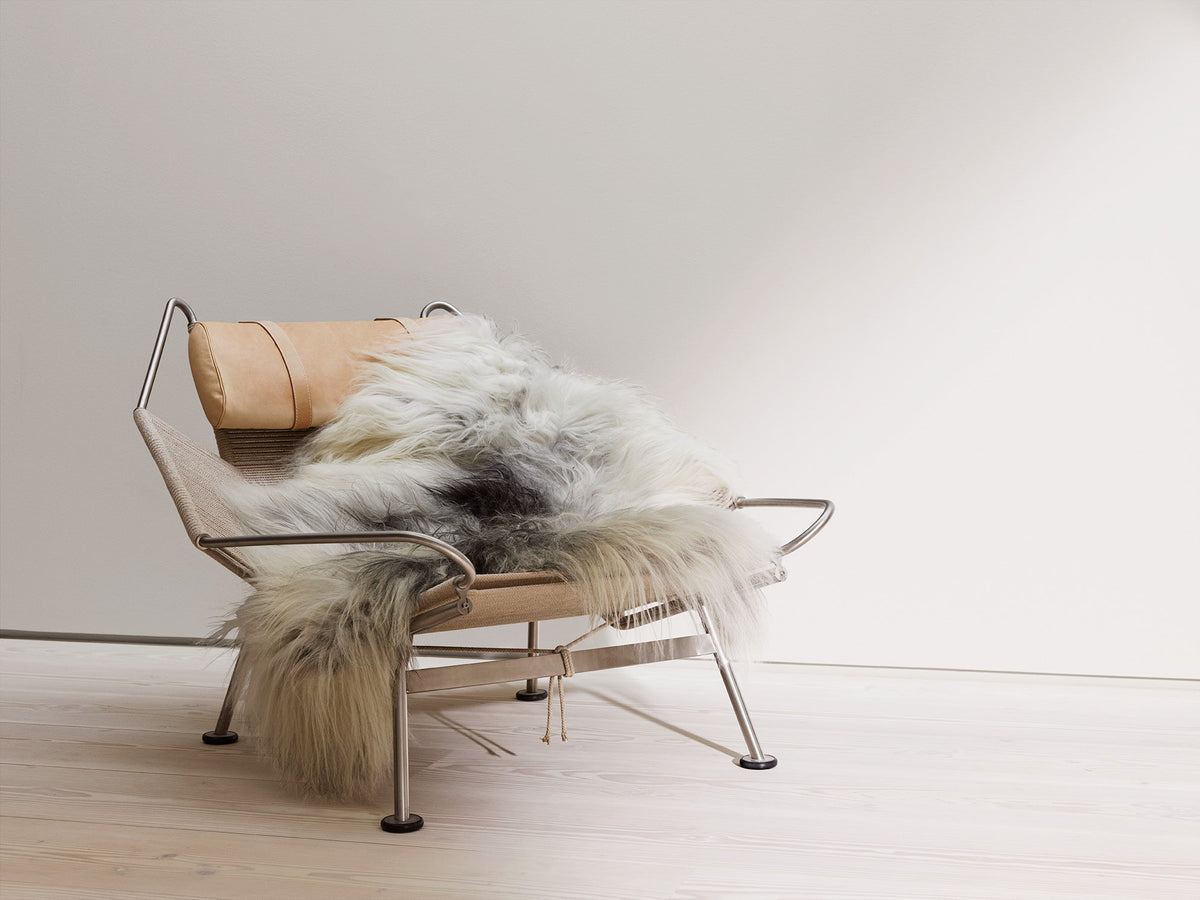
For living rooms, playrooms, and family bedrooms, natural materials offer properties that synthetic alternatives do not. Wool regulates temperature, absorbs sound, resists allergens, and biodegrades at end of life. It does not shed microplastics when cleaned. A sheepskin rug in a family living room is in contact with children and adults throughout the day; the material properties of that rug matter more than they do for a picture on a wall.
The practical implication is not to replace everything synthetic at once, but to make natural material choices in the places with the most direct and sustained contact with the people in the house. Floor rugs, seat pads, throws, and cushions are where that investment makes the most difference.
For allergy-sensitive households
Where dust mite allergy is a concern, the standard advice is to reduce soft furnishings — but the type matters as much as the quantity. Replacing a synthetic rug with a natural wool sheepskin is a different trade-off from simply removing a rug. Regular shaking, which takes seconds, removes the loose debris that would otherwise accumulate in the pile. The lanolin does the rest.
Where a family member has a known wool or lanolin sensitivity, sheepskin is not right for surfaces in prolonged skin contact. Smooth natural materials — cotton, linen, cork — are the more appropriate choice for those positions.
Get in touch
If you have questions about our materials, certifications, or which products suit a sensitive household, we are happy to help.
Email: hello@naturescollection.eu
Phone: +45 75 80 10 50
Read more
Sheepskin in Montessori and Waldorf Environments
Both Montessori and Waldorf environments share a commitment to natural materials. The reasoning differs between the two philosophies, but the conclusion is similar: the materials children are in co...
Read more