

Article: Sheepskin for Babies: What Parents Need to Know

Sheepskin for Babies: What Parents Need to Know
Baby sheepskin is not the same product as standard sheepskin. It is processed differently, it behaves differently, and looking after it requires a different approach. The distinction matters because the properties that make baby sheepskin appropriate for use around infants — chemical-free tanning, genuine machine washability, Woolmark and Øko-Tex certification — are specific to this type and do not apply to standard sheepskins.
What makes it different
Baby sheepskins are processed using medicinal tanning rather than the chrome-salt or aluminium-salt methods used for most standard skins. The result is a skin free from the chemicals associated with conventional tanning, softer against sensitive skin, and genuinely machine washable. That last point is the one most parents ask about first, and it is a real distinction: standard sheepskin should not go in a machine; baby sheepskin can.
The wool has the same properties as any natural sheepskin — lanolin that is naturally antibacterial, hollow fibres that regulate temperature, a softness synthetic alternatives cannot replicate. Baby skins are smaller and have a shorter, denser pile than adult sheepskins, which makes them easier to handle and position.

Baby sheepskin from NaturesCollection carries Woolmark and Øko-Tex certification — independent verification of wool quality and chemical safety.
How parents use it
Prams and pushchairs. A sheepskin liner keeps the baby warm in colder months without overheating in warmer ones. Wool regulates temperature rather than simply insulating, which synthetic liners generally cannot do.
Car seats. A sheepskin liner makes longer journeys more comfortable. Car interiors warm up quickly, and the temperature-regulating properties of wool are particularly useful in that context.
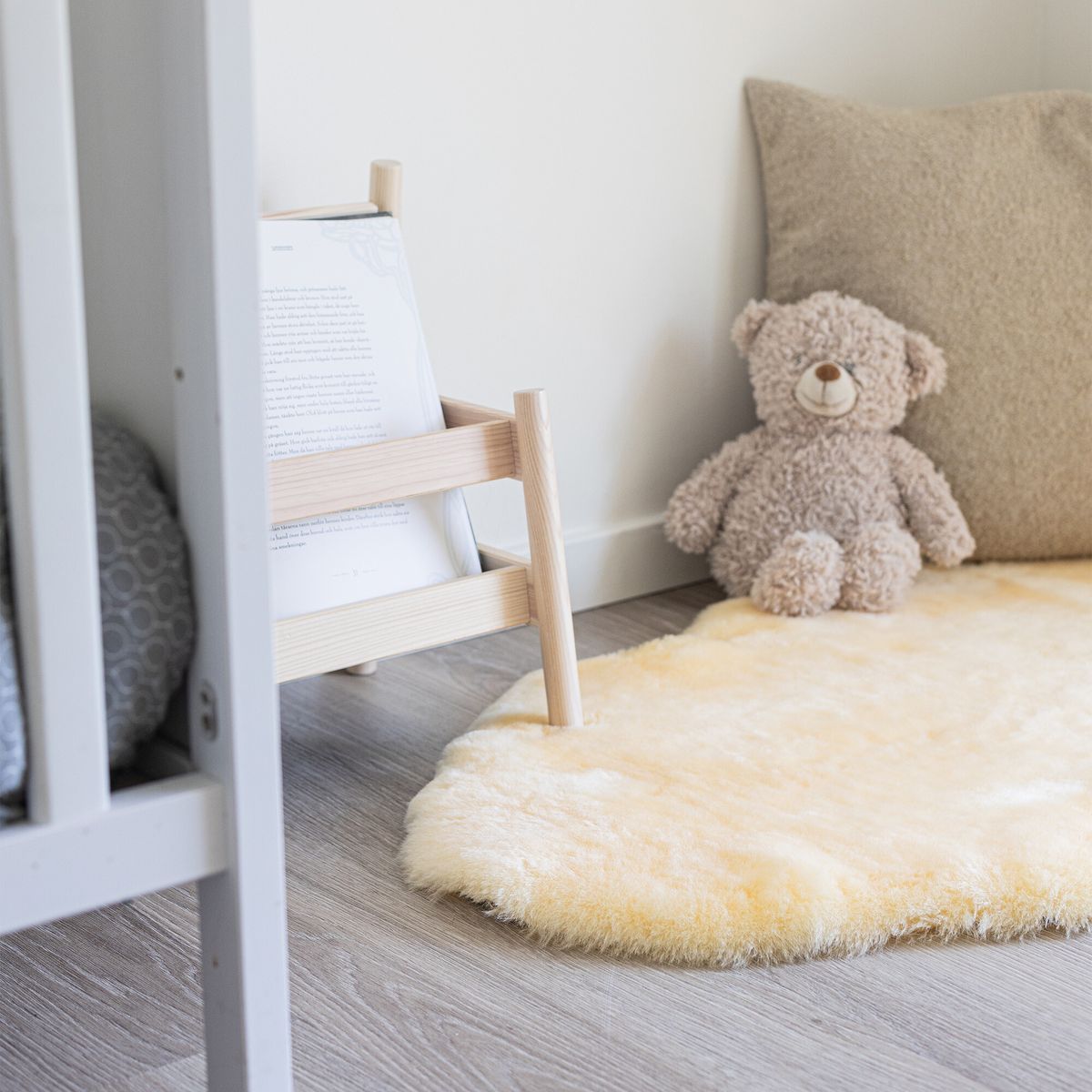
Play mats. On the floor, a baby sheepskin provides a soft, warm surface for early play. The texture of the wool is a sensory experience in itself — distinct from the smooth synthetic surfaces that most play equipment provides.
Changing areas. A sheepskin on a changing mat adds warmth during nappy changes, particularly at night or in colder rooms.
As babies grow into toddlers, the sheepskin continues to earn its place — as a soft mat in a play area, a surface to sit on, and eventually a small rug in a child’s room.
Washing and care
Machine wash on a gentle or wool cycle at 30 degrees or below with a mild wool detergent. Avoid fabric softener — it coats the wool fibres and reduces their natural properties. After washing, reshape while damp and dry flat in a ventilated space away from direct heat or sunlight. Brush gently once dry to restore the texture.
Between washes, regular shaking keeps the pile fresh and removes loose dust. Spot cleaning with a damp cloth handles most small marks without a full wash.
A note on safety
We do not make recommendations about how or where sheepskin should be used with infants. Every family’s situation is different, and parents are best placed to make those judgements in consultation with their health visitor or GP. What we can say is that baby sheepskin from NaturesCollection is certified, chemical-free, and made specifically for use around young children.
Get in touch
If you have questions about our baby sheepskin products or want to discuss a specific use, we are happy to help.
Email: hello@naturescollection.eu
Phone: +45 75 80 10 50
Read more
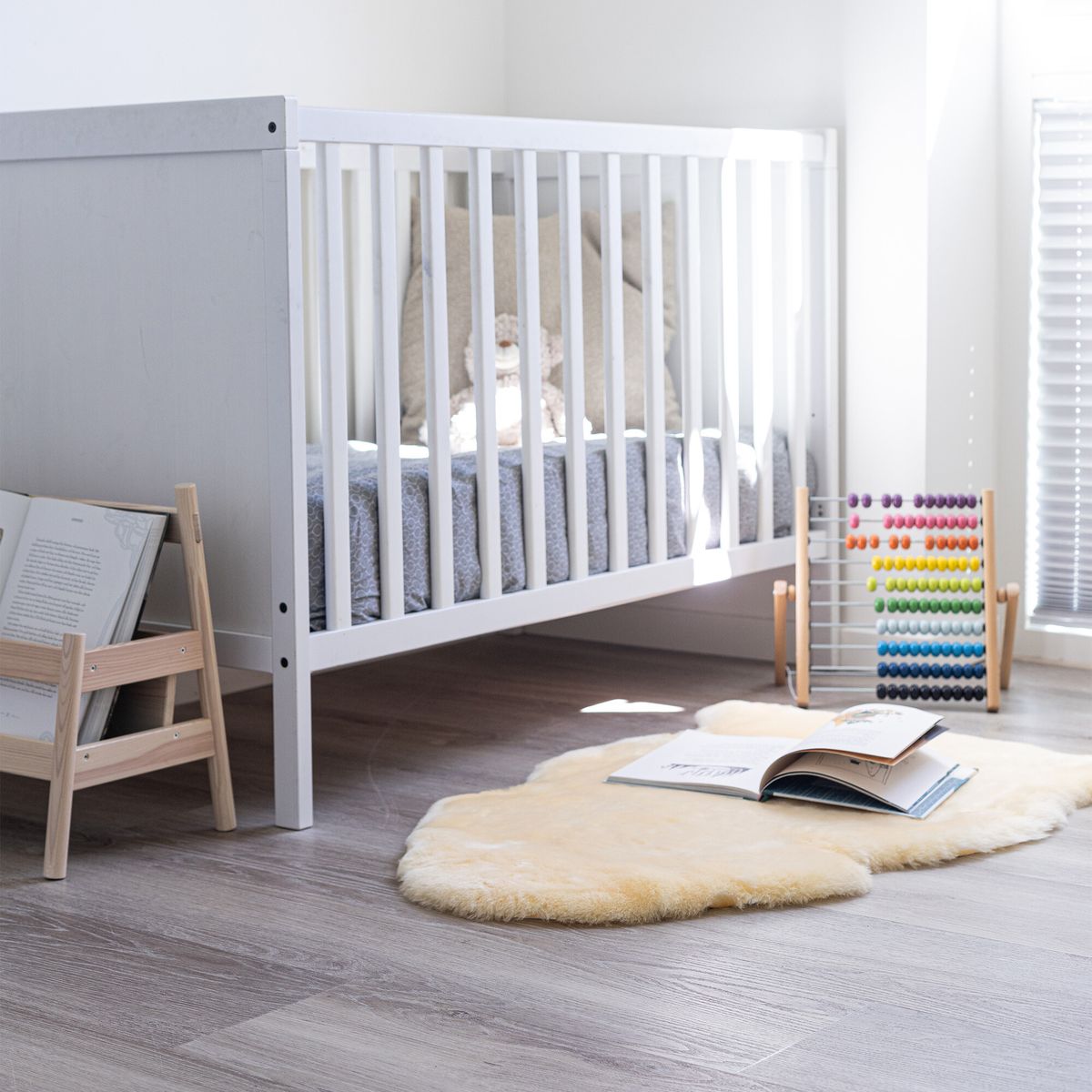
Sheepskin in the Playroom: Natural Comfort for Children
A playroom takes more wear than almost any other space in a home — crawled on, sat on, rolled on, occasionally used as a landing pad. What covers the floor needs to be soft, durable, easy to clean,...
Read more