


Sheepskin in the Playroom: Natural Comfort for Children
A playroom takes more wear than almost any other space in a home — crawled on, sat on, rolled on, occasionally used as a landing pad. What covers the floor needs to be soft, durable, easy to clean, and safe for children who spend a significant portion of their day in direct contact with it. Sheepskin holds up to all of this without the synthetic materials and chemical treatments that come with most purpose-made play mats.
Why natural materials matter at floor level
Children spend more time in direct contact with floor surfaces than adults do. They crawl, sit, lie down, and press their faces into rugs and mats in ways most adults never do. The materials they encounter at floor level are therefore worth more consideration than they typically receive.
Most synthetic play mats contain plasticisers, synthetic dyes, and chemical components from the manufacturing process. Natural wool is different. Lanolin — the oil present naturally in wool — is antibacterial and resistant to dust mites and mould without any added treatment. Wool does not harbour the allergens that synthetic materials accumulate over time. That is not a marketing claim; it is a property of the fibre.

This does not make sheepskin right for every situation. But it is a reasonable basis for preferring natural materials in a space where children spend significant time at floor level.
Which type for a playroom
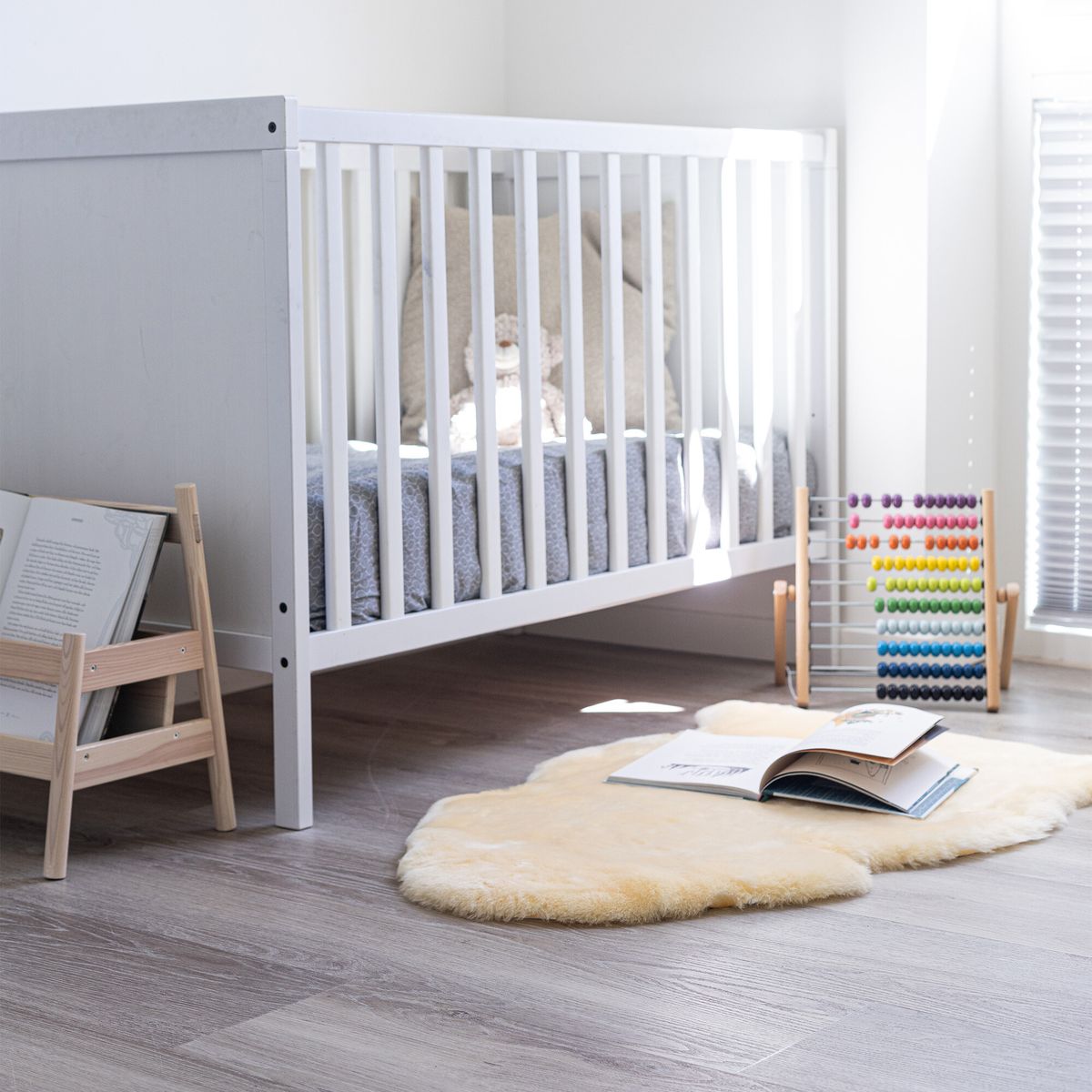
For a playroom floor in active daily use, short-wool New Zealand is the right choice. The lower pile (2–3 cm) is stable underfoot, does not tangle, and holds up to sustained contact without compressing. It is also the most forgiving type when it comes to cleaning, which in a playroom context matters considerably.
Long-wool New Zealand (5–7 cm) works well in a corner used for quieter activities — reading, drawing, building — where the richer texture adds comfort without being subject to the same level of wear as a central floor area.
Tibetan and Gotland sheepskins are not appropriate for a playroom floor. Their curly pile structures are not designed for foot traffic, and they are harder to maintain under family conditions.
Size and placement
For a dedicated play area within a larger room, a double sheepskin provides enough coverage for a group of children to sit and play without crowding the edges. A single skin works as a defined spot for one child — a reading corner, a building area, a place beside a toy shelf.
In a dedicated playroom, a quad or larger multi-hide configuration can cover most of the floor and provide a consistent, warm surface throughout. This is particularly worth considering in rooms with stone, tile, or bare timber flooring, where the warmth and cushioning underfoot make a real difference to how long children are comfortable at floor level.
Cleaning
Sheepskin in a playroom will get marked. The routine needs to be realistic for a household with children.
Shaking the skin every few days removes loose debris and prevents the pile from compressing. Most marks — food, drink, general play — respond to spot cleaning with a damp cloth and a small amount of lanolin-based wool detergent, blotted rather than rubbed. For New Zealand sheepskin that needs a deeper clean, a gentle machine cycle at 30 degrees is possible as a last resort. For other types, spot cleaning and airing is the full protocol.
Shaken regularly and spot cleaned promptly, a sheepskin will stay in good condition for several years of family use. The wool recovers well from compression; the main risk to longevity is saturating the leather backing with water, which should be avoided.
Get in touch
We supply sheepskin for family and children’s spaces and can advise on sizing and pile type for specific rooms. If you have questions before ordering, get in touch.
Email: hello@naturescollection.eu
Phone: +45 75 80 10 50
Read more
Sheepskin in Montessori and Waldorf Environments
Both Montessori and Waldorf environments share a commitment to natural materials. The reasoning differs between the two philosophies, but the conclusion is similar: the materials children are in co...
Read more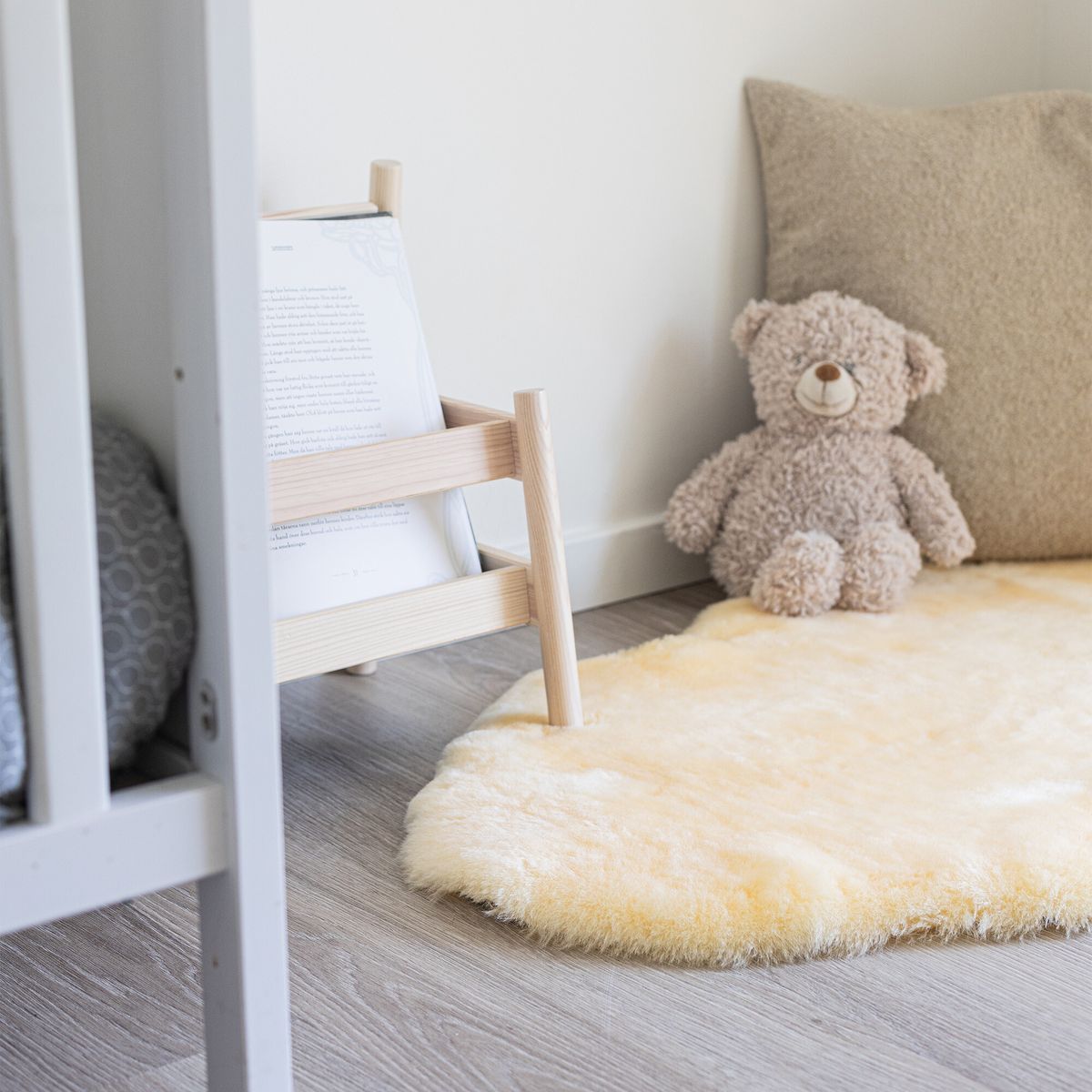
Sheepskin for Babies: What Parents Need to Know
Baby sheepskin is not the same product as standard sheepskin. It is processed differently, it behaves differently, and looking after it requires a different approach. The distinction matters becaus...
Read more