

Article: How Boutique Hotels Use Sheepskin to Elevate the Guest Experience

How Boutique Hotels Use Sheepskin to Elevate the Guest Experience
In boutique hospitality, the physical quality of a room is part of what guests are paying for. The materials in the room either communicate that quality or they undermine it. Sheepskin has become a consistent element in boutique hotel interiors because it performs well against the criteria that matter in this context: warmth underfoot and to the touch, durability under daily housekeeping, and a natural character that reads as considered rather than generic.
This article covers where sheepskin works in a hotel setting, what to look for in a supplier, and how to approach the specification. If you want to discuss quantities or a specific project, contact details are at the end.
Where it works in a hotel room
The bedroom is the primary application. Three positions earn their place consistently.
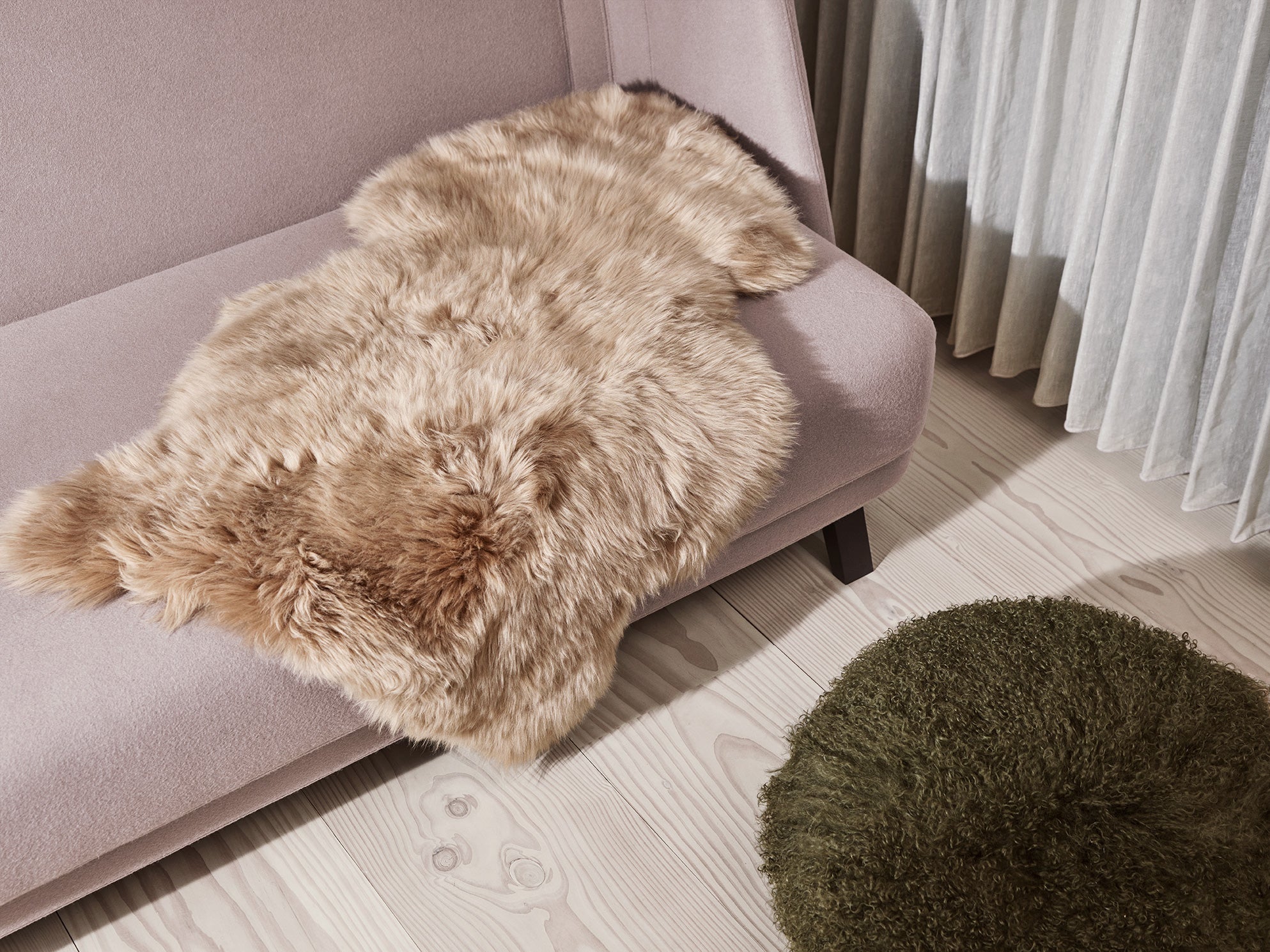
At the foot of the bed. A sheepskin placed centrally on a made bed adds texture and warmth to what is often the flattest surface in the room. It photographs well, which matters for marketing, and it is one of the first things a guest notices on arrival. A single New Zealand long-wool skin in a natural or neutral dyed colour is the standard specification. It does not need to be large or elaborate.
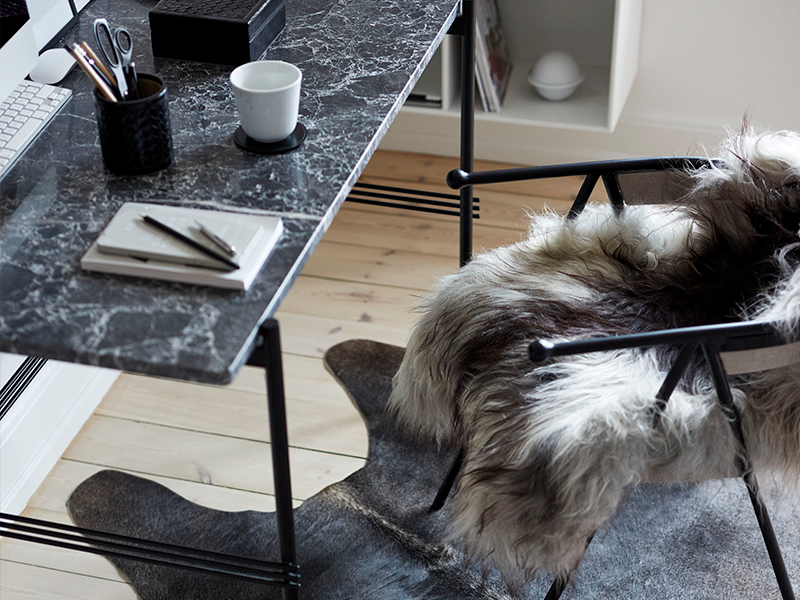
On a bedroom chair or armchair. A skin draped over a chair gives guests something to reach for in the evening — a small detail that lands well precisely because it feels unforced. Low cost per room relative to the impression it makes.
As a floor layer. In rooms with hard flooring — which many boutique properties favour for maintenance reasons — a sheepskin beside the bed provides the warmth underfoot that guests expect in a quality room. Short-wool New Zealand is the practical choice here: dense enough to feel substantial, resilient enough for daily handling.
Common areas
Beyond the bedroom, sheepskin works in any seating area where the brief is to encourage guests to settle in. A lounge with sheepskin-draped armchairs or seat pads on bar stools reads as warm and informal in a way that formal upholstery rarely does.
For outdoor or semi-covered spaces — a terrace, courtyard, or fire pit area — sheepskin throws over seating extend the usable season and add a quality to the space that synthetic alternatives do not. Natural undyed skins are the right choice for outdoor positions; dyed skins fade in direct sunlight.
What to look for in a supplier
Batch consistency is the most important practical requirement. A property speccing twelve rooms needs confidence that the skins across those rooms match in pile quality, colour, and dimensions. That rules out ad hoc retail sourcing and requires a supplier who can fulfil batch orders from traceable, matched stock.
Durability needs to match housekeeping frequency. A skin shaken out and inspected daily needs to be made to a standard that handles that routine without deteriorating. New Zealand chrome-salt tanned sheepskin is the most resilient option available for commercial use.
Provenance has become a guest-facing consideration for a growing number of properties. Sheepskin sourced from New Zealand Merino farms with no mulesing, as a by-product of meat production, has a story that holds up to scrutiny. Ask suppliers for documentation that supports their sourcing claims rather than taking general sustainability language on trust.
Working with us on a hospitality project
We supply sheepskin to boutique hotels, lodges, and hospitality businesses directly and can fulfil project quantities with consistent specifications. For room counts of ten or more, lead time and stock availability are worth discussing before you commit to a spec.
Email: hello@naturescollection.eu
Phone: +45 75 80 10 50
Read more
The Case for Natural Textiles in Hospitality Design
The argument for natural textiles in hospitality is not primarily aesthetic. It is practical. Natural materials perform differently from synthetics in ways that matter in a commercial context: they...
Read more