


10 Creative Ways to Use Sheepskin in Your Home
Most people buy a sheepskin for a chair. Then they find themselves wondering where else it might work. The answer is quite a few places.
Below are ten uses that we see people come back to — some obvious, some less so. A few might change how you think about what sheepskin is actually for.
1. Dining chair throws
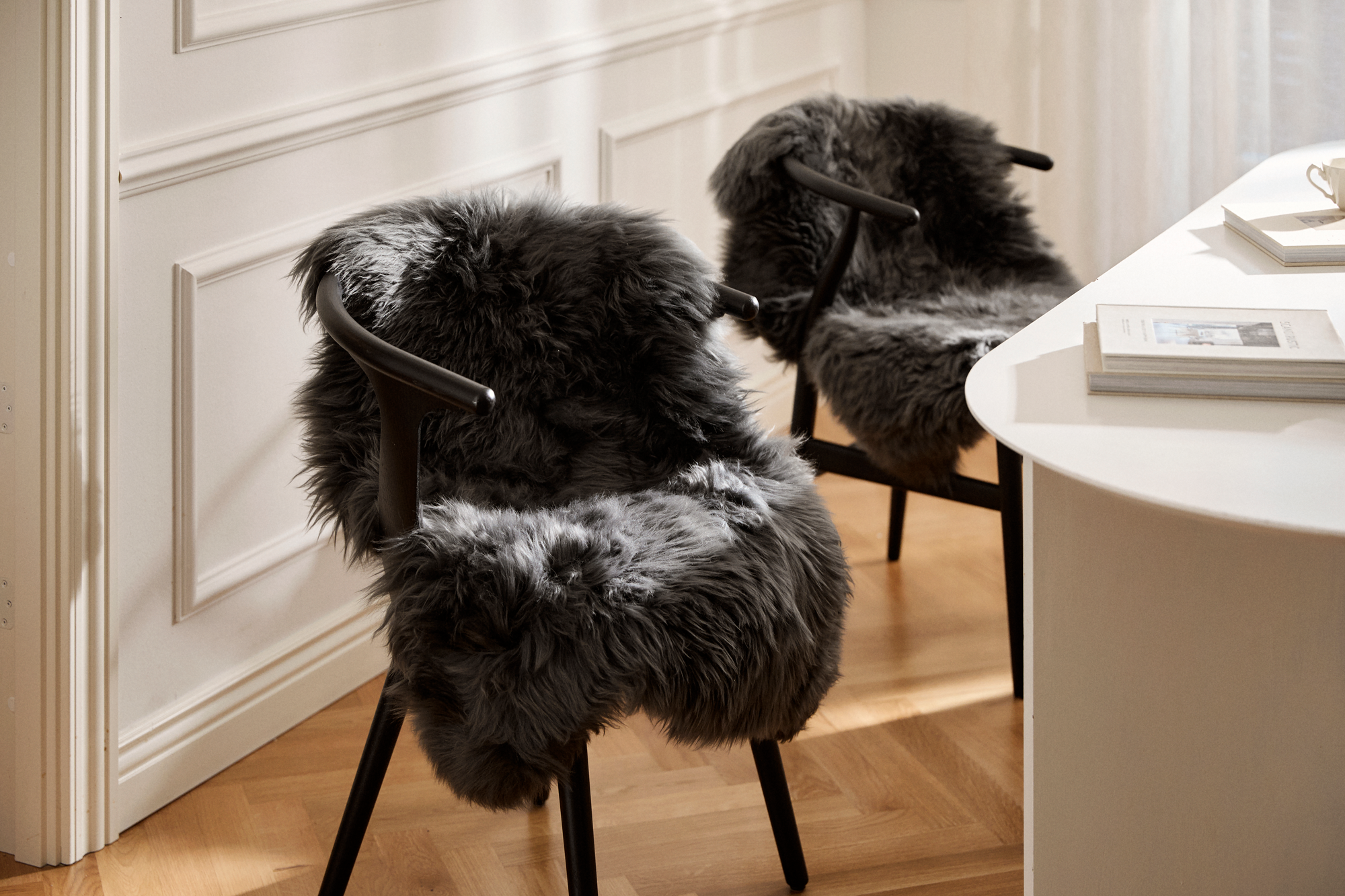
The most common use. A sheepskin draped over a dining chair does two things: it makes the chair considerably more comfortable for a long meal, and it adds texture to a room that can otherwise feel a little hard-edged. For a standard dining chair, a 90–95 cm skin is usually the right size — long enough to drape properly without pooling on the floor.

If you have a set of chairs, you do not need to cover every one. Two or three skins among six chairs can look more considered than a full matching set.
2. Bedroom throws
Layered at the foot of the bed, a sheepskin adds warmth without the weight of an extra duvet. In a bedroom with linen bedding, the softness of the wool against the crisp weave of the fabric works well visually. New Zealand long-wool skins suit this particularly well — the depth of the pile gives them a presence that shorter-pile options do not quite match.
3. On a sofa

Sheepskin on a sofa is underused. Draped over one end of a two- or three-seater, it works both as a throw you will actually reach for and as a way of anchoring the look of a sofa that has become a little tired. A longer Icelandic skin, with its relaxed, natural character, suits this better than a tightly cropped short-pile option.
4. A reading chair
If there is a chair in your home for reading or sitting quietly, a sheepskin makes a real difference to how long you stay there. The warmth and the particular softness of wool — under you rather than around you — are harder to replicate with a cushion. Tibetan sheepskin, with its exceptionally soft, loose curls, is the most indulgent choice for this use.
5. A floor rug in a small space
A single sheepskin makes a good rug in a space too small for a standard rug: a reading nook, the area beside a bed, a bathroom floor. It does not need to cover a large area to work — it just needs to be in the right place. Natural-colour undyed skins tend to work best on floors; they are harder-wearing and will not fade in indirect light.
6. A baby mat
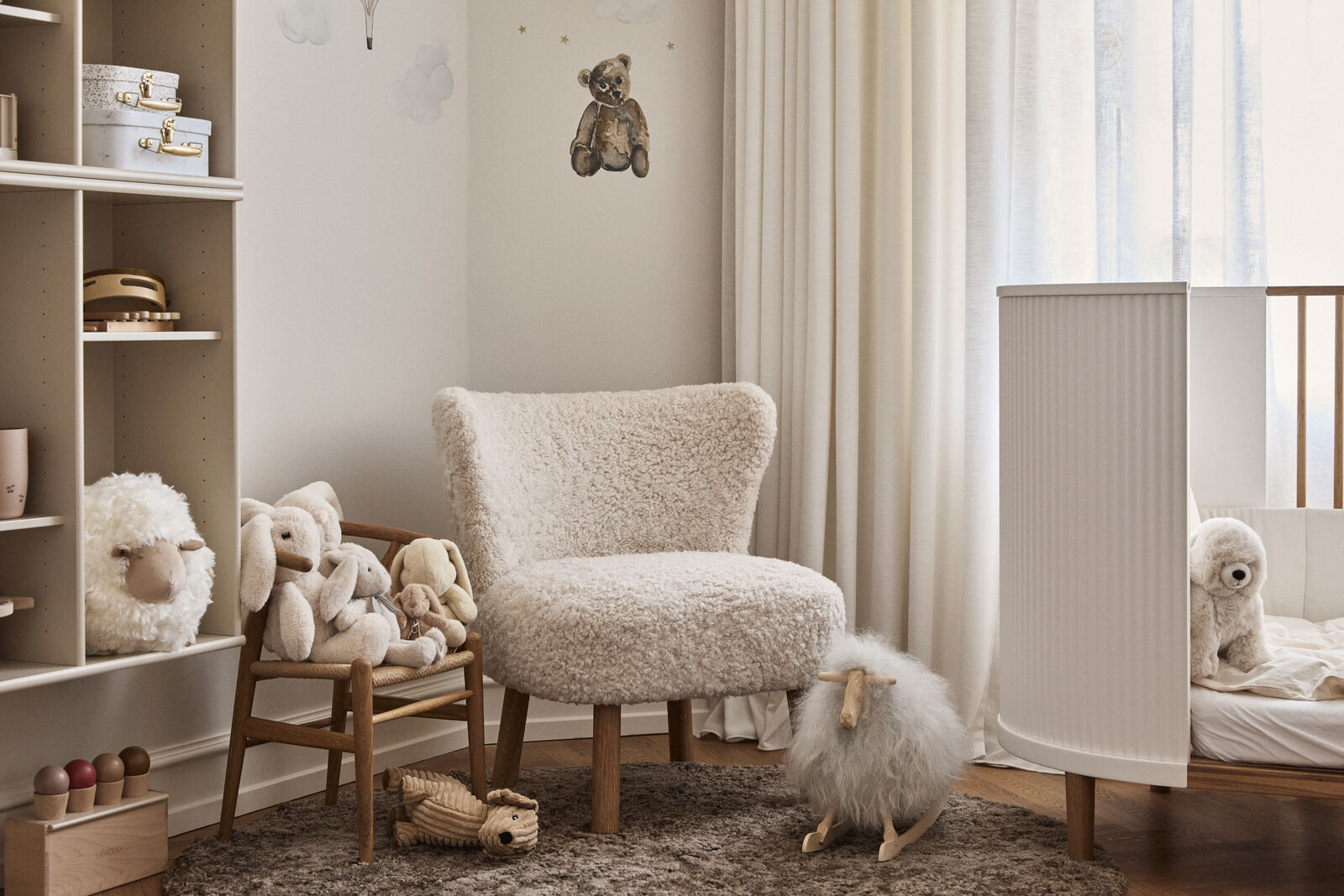
Baby sheepskins are purpose-made: medicinally tanned, free from harsh chemicals, and machine-washable in a way that other sheepskins are not. They are used in prams, on changing tables, in Moses baskets, and on play mats. The lanolin in the wool resists bacteria naturally, and the temperature-regulating quality of wool means the skin stays comfortable across conditions — warm in winter, not clammy in summer.
7. Garden and terrace seating
People are often surprised that sheepskin works outdoors. The same temperature-regulating quality that makes it comfortable inside works just as well on a terrace. On a cool evening, it is the difference between staying outside and going in.
For outdoor use, stick to undyed, natural-colour skins — dyed sheepskins will fade in direct sunlight. Icelandic and English skins in their natural colours are the right choice here.
8. A wall hanging
A well-chosen Gotland or Tibetan sheepskin hung on a wall adds warmth and texture in a way that a picture or mirror does not. The curled, lustrous wool of a Gotland skin has a sculptural quality; it catches light differently at different times of day. This works best in a bedroom or living room where the wall has space and the skin can be seen properly.
There is a practical benefit too: wool absorbs sound, so a wall-mounted skin in a room with hard floors and high ceilings will quietly improve the acoustics.
9. A home office chair
If you spend significant time at a desk, the chair matters more than most people admit. A sheepskin seat pad — or a full skin draped over the chair — improves both comfort and temperature regulation. This is particularly noticeable in winter, when a cold leather or hard plastic seat takes a while to warm up. Sheepskin does not have this problem.

10. Layered over an existing rug
Layering textiles is something Scandinavian interiors do well, and sheepskin is well-suited to it. A skin laid over a flat-woven jute or cotton rug adds height, softness, and a point of focus. The key is contrast — a short, tight-pile sheepskin on a flat rug does not add much. A long Icelandic or Tibetan skin on a flat-woven base creates a more interesting effect.
It is also a practical solution if you have a rug you like but find it a little hard underfoot in a seating area.
If you are not sure which type suits the use you have in mind, our complete buying guide covers the differences between origins and pile lengths in more detail. For care, the approach varies by type — our cleaning and care guide has the specifics.
Read more
The Different Types of Sheepskin: New Zealand, Icelandic, Tibetan and More
Not all sheepskins are the same. The differences between a New Zealand short-wool and an Icelandic long-wool are significant enough to affect how you use them, where you put them, and how you look ...
Read more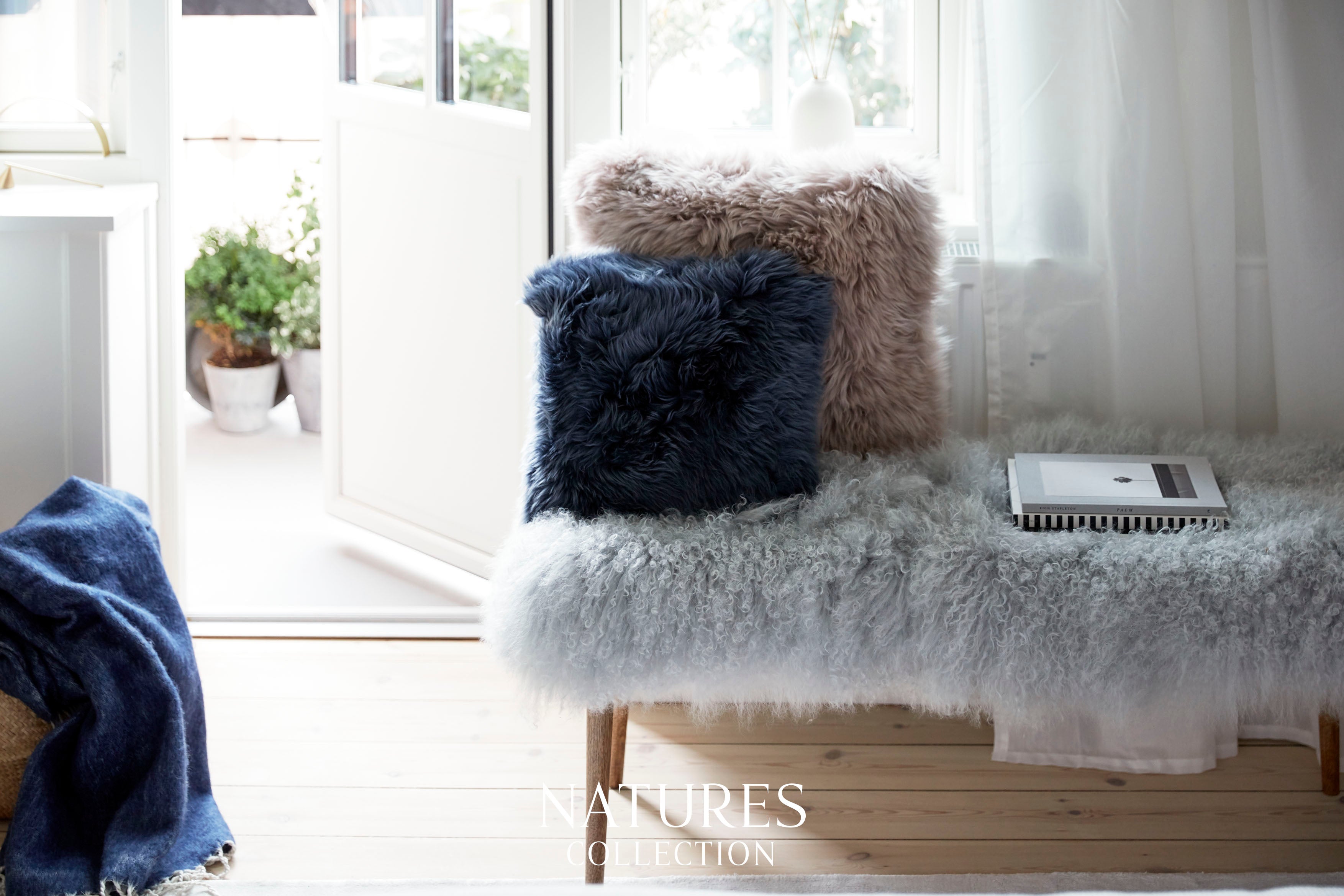
Are Sheepskins Sustainable? An Honest Look at Natural Wool Products
It is a fair question. If you care about what you bring into your home, you should ask it about everything — sheepskin included. The honest answer is that sheepskin sits in an unusual position: it ...
Read more