


The Different Types of Sheepskin: New Zealand, Icelandic, Tibetan and More
Not all sheepskins are the same. The differences between a New Zealand short-wool and an Icelandic long-wool are significant enough to affect how you use them, where you put them, and how you look after them. Knowing those differences before you buy saves a lot of second-guessing afterwards.
Below is a guide to the main types we carry, what makes each one distinct, and what each is best suited to.
New Zealand sheepskin
New Zealand is our most popular origin, and it is easy to see why. The wool is dense and consistent, and comes in both long and short pile — which gives you real flexibility depending on where the skin is going.
Long-wool New Zealand has a pile of around 5–7 cm: full enough to feel substantial, short enough to look tidy. It holds its shape well with regular brushing. The chrome-salt tanning also makes it the most forgiving of all our skins when it comes to cleaning — New Zealand is the only type where machine washing is a last-resort option rather than an outright no.
Short-wool New Zealand sits at 2–3 cm. The tighter, more tailored appearance works well in modern or minimalist interiors where a long-pile skin might feel too textural. Good for dining chairs, desk chairs, and anywhere you want the warmth without the visual weight.
New Zealand skins are available dyed in a range of colours. They come from Merino sheep farmed without mulesing — a deliberate choice on our part, and the reason we source from New Zealand rather than Australia.

Best for: dining chairs, bedroom throws, everyday use, dyed colour options.
Icelandic sheepskin
Icelandic skins have a different character entirely. The pile is longer — 12–15 cm in the long-wool version, 5–7 cm in short — and the wool is finer and more loosely structured, giving the skin a relaxed, almost wild quality that New Zealand does not have.
They come in natural, undyed colours: creams, greys, browns, and blacks, depending on the animal. No two are exactly the same. That variation is part of the appeal, not something to be concerned about.
Icelandic skins are aluminium-salt tanned, which means they are not suitable for machine washing — the salts wash out and the leather stiffens irreversibly. Spot-clean only, and keep the leather side away from water.

Best for: sofas, reading chairs, wall hangings, outdoor and terrace use (undyed wool will not fade in sunlight).
Tibetan/Mongolian sheepskin
Tibetan sheepskin is the most distinctive type we carry. The wool grows in loose, open curls — exceptionally soft and light, unlike anything else in the range. It is primarily decorative, and there is no point pretending otherwise.
Two things to know: do not brush a Tibetan skin, as it damages the curl structure permanently; and do not machine wash it. Shake it out regularly and spot-clean as needed.

Best for: statement pieces, wall hangings, decorative throws, anywhere the texture itself is the point.
Gotland sheepskin
Gotland skins come from a Swedish breed known for a particularly fine, lustrous curl. The wool is tighter and more defined than Tibetan, with a natural sheen that catches light well. Colours run to grey, silver, and soft brown — naturally occurring, not dyed.
Like Tibetan, Gotland should not be brushed — it damages the curl. The wool is also relatively firm compared to New Zealand or Tibetan, which gives it a sculptural quality. Hung on a wall, a good Gotland skin looks considered rather than rustic.

Best for: wall hangings, accent pieces, Nordic or natural interiors.
English sheepskin
English sheepskins are vegetable- or eco-tanned, which gives them a slightly rawer, more artisanal character. The wool is soft and fine, in natural off-white and cream tones. Like Icelandic skins, they are not suitable for machine washing — the leather will crack.
Being undyed, they work well outdoors without fading in direct sunlight. They also carry a provenance story that matters to some buyers — traceable, locally farmed, processed without harsh chemicals.

Best for: outdoor and garden use, natural or craft-led interiors, buyers for whom provenance and tanning method matter.
Austrian sheepskin
Austrian skins have a knottier, more textured wool than New Zealand — a product of the Alpine breed, which grows a thicker, more characterful fleece. The pile has a curled, slightly rough quality that reads as rugged rather than refined, in natural earth tones.

Best for: spaces where warmth and character matter more than precision — a cabin, a study, a reading corner.
Gotland vs Tibetan: a note on the curly wools
These are the two types people most often confuse, and they are genuinely different. Tibetan is softer, lighter, and more open in its curl — it moves easily and has an almost cloud-like quality. Gotland is denser, shinier, and more structured. If you want something maximally soft and floaty, go for Tibetan. If you want visual definition and lustre, Gotland.
Quick reference
| Type | Pile | Character | Machine wash | Brush |
|---|---|---|---|---|
| NZ long-wool | 5–7 cm | Dense, consistent, dyed options | Last resort only | Yes |
| NZ short-wool | 2–3 cm | Tailored, modern | Last resort only | Yes |
| Icelandic long-wool | 12–15 cm | Loose, natural, Nordic | No | Yes |
| Icelandic short-wool | 5–7 cm | Natural, more compact | No | Yes |
| Tibetan | Variable | Soft open curls, decorative | No | No |
| Gotland | Variable | Defined curls, lustrous | No | No |
| English | Medium | Soft, natural, eco-tanned | No | Yes |
| Austrian | Medium | Knotted, textured, rugged | No | Yes |
For more on caring for each type, our cleaning and care guide covers the specifics. If you are still deciding which type suits your space, the complete buying guide walks through how to choose by size, use, and setting.
Read more
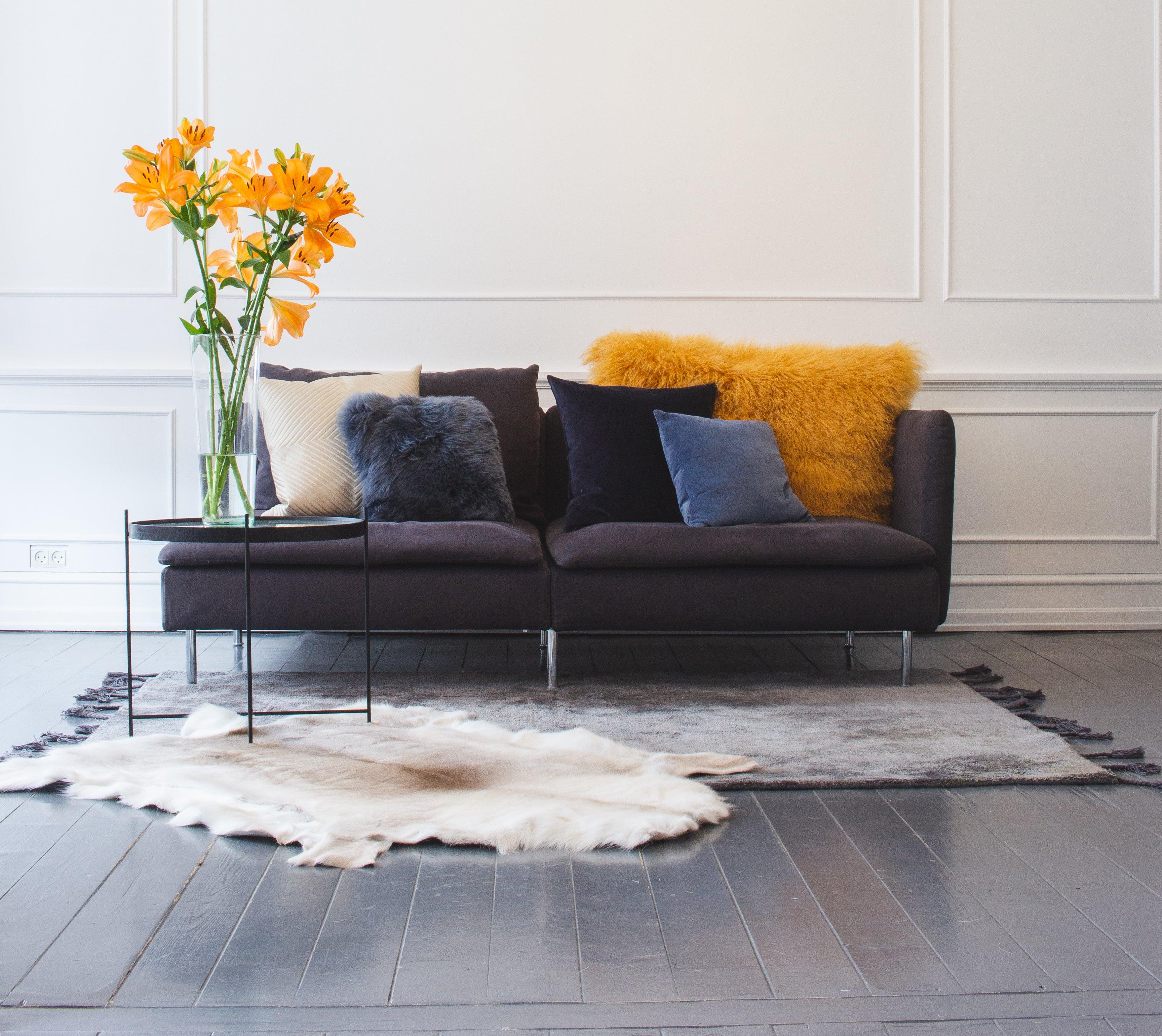
5 ways to change your living room
Are you missing something in the living room and are you having a hard time figuring out what it is? Don’t you worry, we think that we have found the answer! It is important to feel at home and to ...
Read more
10 Creative Ways to Use Sheepskin in Your Home
Most people buy a sheepskin for a chair. Then they find themselves wondering where else it might work. The answer is quite a few places. Below are ten uses that we see people come back to — some ob...
Read more