

The Complete Guide to Buying Sheepskin
A sheepskin rug is not the most straightforward purchase. Quality varies considerably between suppliers, sizing is less intuitive than it looks online, and caring for it properly requires a different approach than most other home textiles. Bought well and looked after, though, a sheepskin will outlast most things in your home — and hold its character far better than synthetic alternatives.
This guide covers what is worth knowing before you buy: how to tell quality from imitation, which size suits which space, where sheepskin works well around the home, and how to care for it over time.
Real sheepskin vs faux: does it actually matter?
Yes, and the difference is more significant than most people expect.
Real sheepskin is a natural product. The fibres are hollow, which means they regulate temperature — insulating in winter, relatively cool in summer. They also wick moisture naturally, which explains why sheepskin has been used in everything from medical seat pads to infant blankets for generations. It is not a material that follows trends. It has persisted because it works.
Faux sheepskin is typically polyester or acrylic. In a product photograph, the difference can be hard to spot. In use, it becomes apparent quickly: synthetic fibres do not breathe, they mat under foot traffic, and after washing they tend to lose their shape permanently. The pile does not recover the way natural fibre does.
For a sheepskin that will actually be used — sat on, draped over furniture, laid on a floor — the natural option is worth the additional cost. The lifespan alone justifies it.
Where faux sheepskin has a reasonable case is in specific circumstances: high-turnover rental properties, or purely decorative applications where the piece will rarely be touched. In those situations, the lower upfront cost may make sense. The important thing is to choose with clear expectations rather than assuming the two are equivalent.
What to look for in a real sheepskin
Wool length and density. Longer wool looks more dramatic and feels more luxurious underfoot, but shorter, denser wool holds its shape better over time. For a high-traffic spot — a hallway, a living room floor — a medium-length, dense wool is the more practical choice. For a bedroom or draped over furniture, longer wool is a pleasure.
The hide. The leather side should be soft and supple, not stiff or cracked. A stiff hide usually means lower-quality tanning. It will not age well and can be uncomfortable against skin.
Origin. Where a sheepskin comes from matters for quality and for animal welfare — and the two are more connected than people often assume.
Size. A single sheepskin is roughly 90–110 cm long. Double and quad sizes are multiple hides sewn together. The stitching on a well-made piece should be nearly invisible from the wool side.

What size do you actually need?
Sizing is where many buyers go wrong. Sheepskin rugs tend to look smaller in photographs than in person — but also smaller in the room than will fill the space you have in mind.
A single sheepskin works well draped over a chair or sofa, laid at the foot of a bed, or used as a considered accent in a reading corner. As a standalone floor rug in a living room, it will almost always look insufficient.
A double sheepskin — two hides joined — is the minimum for most living room applications. It works well in front of a sofa, as a bedside rug in a medium-sized room, or across dining chair seats. It is the most versatile size for most homes.
A quad or larger is right for open-plan spaces, generous living rooms, or as the main rug in a principal bedroom. At this scale, the underfoot warmth is considerable — which in a UK winter is a practical consideration as much as an aesthetic one.
Before ordering, mark out the intended dimensions on the floor with tape. It takes a few minutes and removes most of the uncertainty around scale.

Where to use a sheepskin
The living room floor is the obvious starting point, but sheepskin works well in a wider range of situations than most people initially consider.
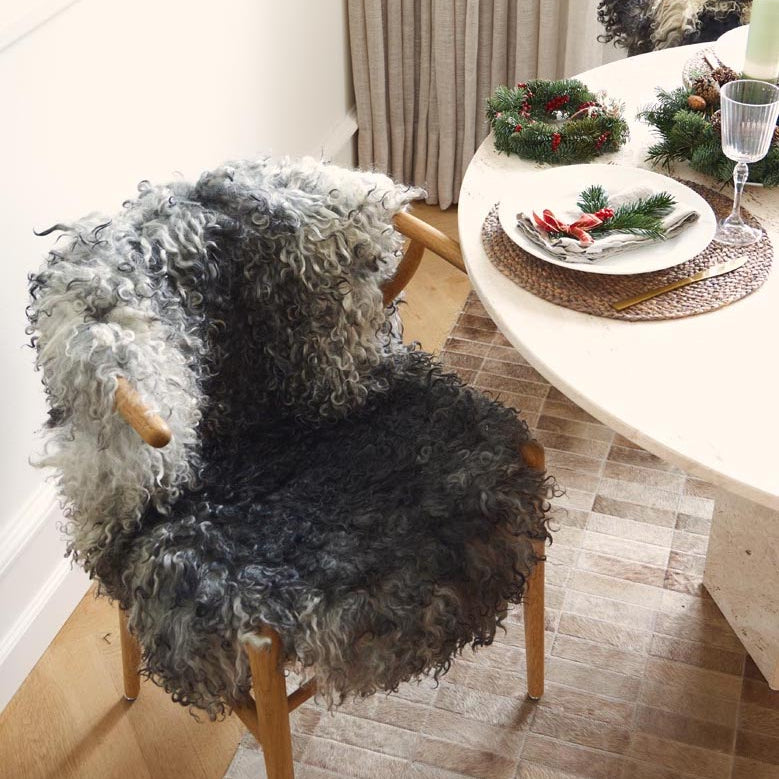
Over chairs and sofas. Draped over the back of an armchair or folded across the arm of a sofa, a sheepskin throw introduces texture and warmth without requiring any significant commitment to a new look. It can be moved or removed easily.
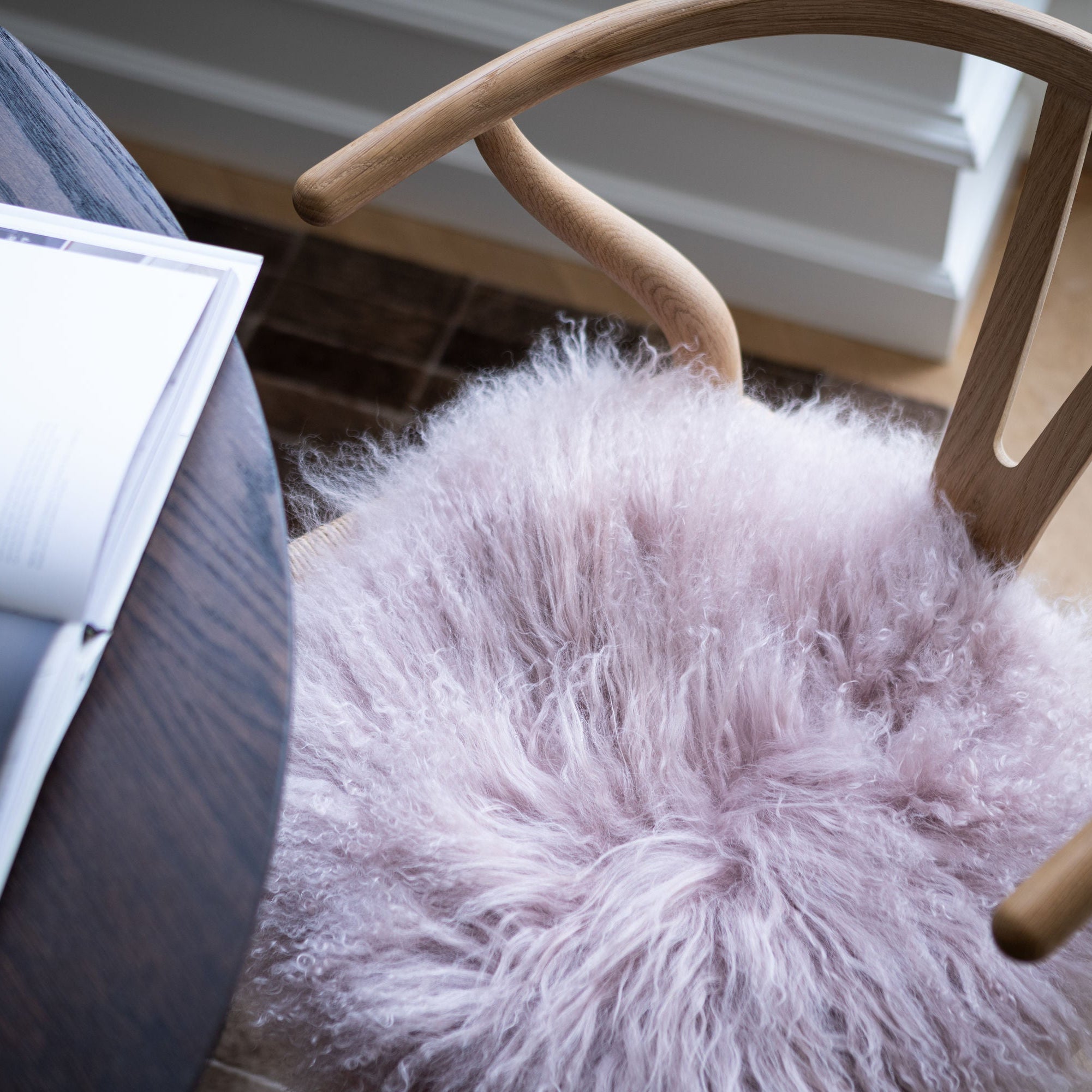
As a seat pad. Sheepskin seat pads on dining chairs have been standard in Scandinavian homes for generations — comfortable, warm, and visually right. The same applies to desk chairs, and to outdoor seating on a covered terrace.
In the bedroom. A sheepskin placed at the foot of the bed, or alongside it, means the first contact with the floor on a cold morning is warm wool rather than bare board or cold stone.
In a child's room. Natural sheepskin is hypoallergenic and inherently resistant to dust mites, which makes it well suited to children's spaces. The pile is forgiving enough that a toddler taking a tumble is not a concern.
For outdoor entertaining. Sheepskin is not weatherproof and should not be left outside. For a covered terrace, a garden gathering, or an outdoor event where pieces will be brought in afterwards, however, sheepskin throws over chairs add warmth and a quality to the setting that synthetic alternatives rarely manage.

How to care for a sheepskin rug
Sheepskin is more resilient than many people assume, but it does require a different approach than synthetic rugs. With regular, simple care, very little goes wrong.
Shake it out regularly. This is the single most effective thing you can do day to day. Wool fibres compress under foot traffic, and shaking the rug out restores the loft and prevents matting.
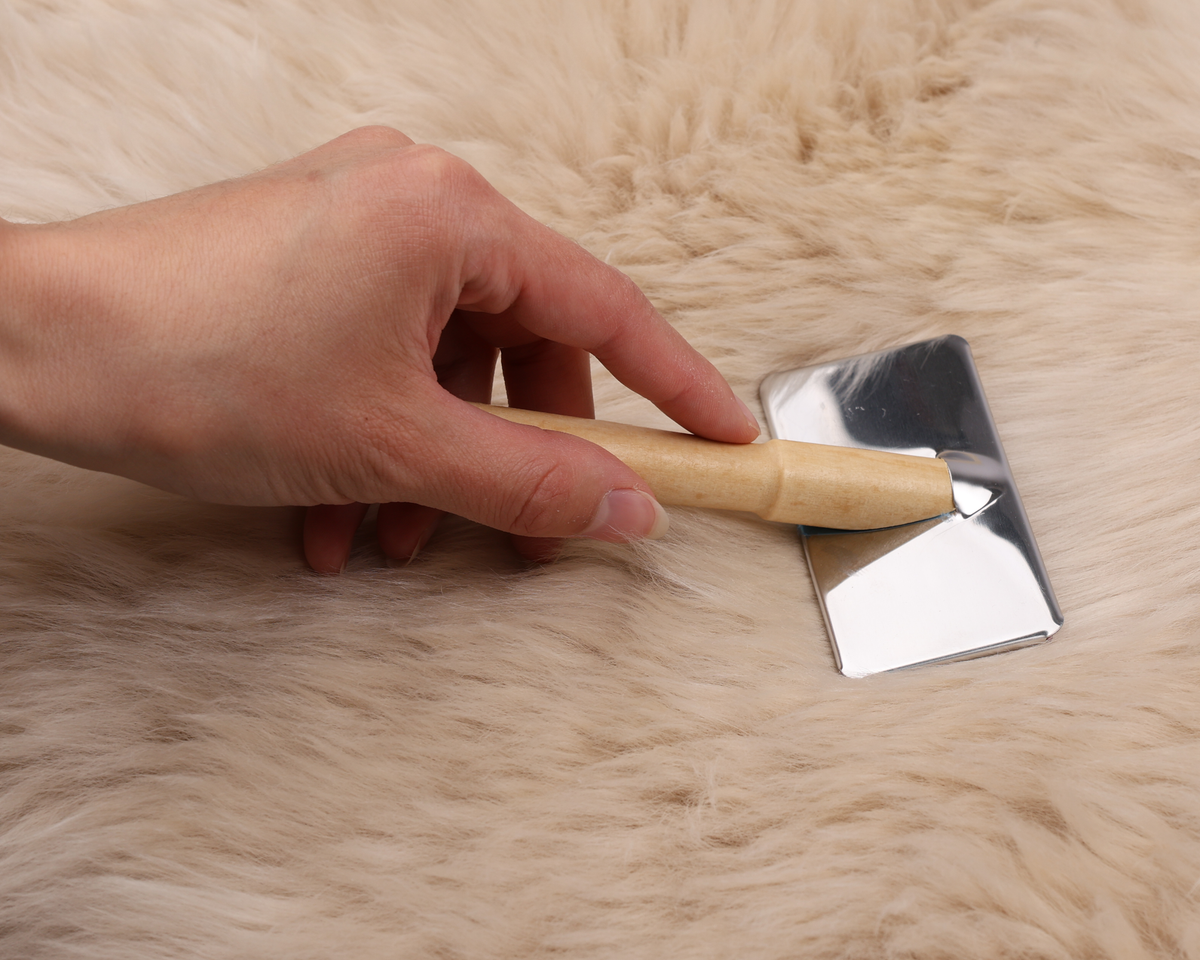
Brush it occasionally. A wide-toothed comb or a dedicated sheepskin brush, drawn through the wool gently, keeps the fibres from tangling and maintains the texture. Once every few weeks is enough for a rug in regular use.
Spot clean first. For most spills and marks, a damp cloth with a small amount of wool-safe detergent is all you need. Blot rather than rub.
On washing. After years of testing our own products, we advise against machine washing in all but the most extreme circumstances — heavy soiling that cannot be addressed by spot cleaning. Even at 20 or 30 degrees, machine washing almost always stiffens the leather backing and strips the wool of the softness that makes sheepskin worth buying. Most sheepskins do not fully recover from it. Spot cleaning, regular airing, and occasional professional cleaning are better long-term choices.
Air it outside. Hanging a sheepskin outside on a dry, still day — away from direct sunlight — refreshes the wool considerably. It is the most underrated part of sheepskin care.
With this approach, a quality sheepskin will remain in excellent condition for ten years or more.
A note on sustainability
Sheepskin is a by-product of the meat industry — the hides would otherwise go to waste. Compared to producing a synthetic rug from virgin petrochemicals, using that hide is the more resource-efficient choice. Natural wool also biodegrades. A polyester rug does not. The honest caveat is tanning: the environmental cost varies by method, and it is worth asking suppliers how their hides are processed.
Where to buy
The quality difference between a well-made sheepskin and a mass-produced one is significant. Hide suppleness, wool density, stitching quality on larger sizes, and the consistency of the tanning process all vary between suppliers.
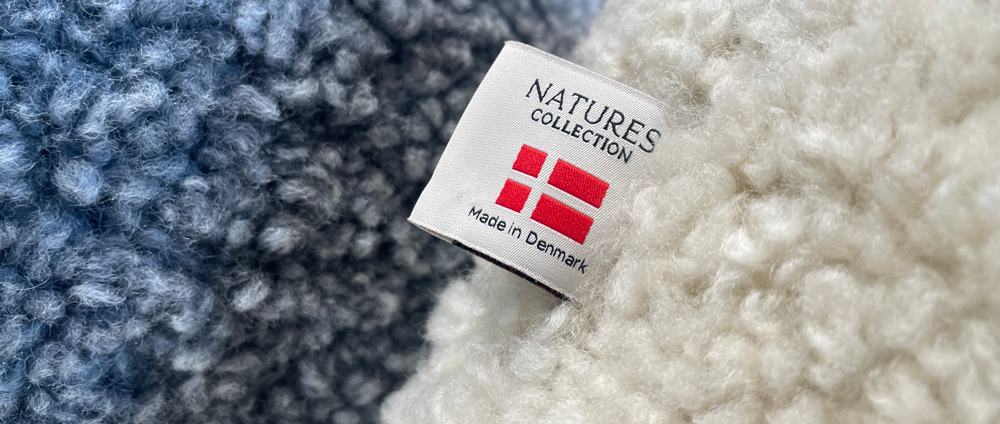
At NaturesCollection, we produce our carpets and furniture in Denmark and sell directly. If you have questions about sizing, wool type, or which product suits a particular space, we are happy to advise before you order.
Read more
How to Clean and Care for Your Sheepskin Rug or Throw
How to clean and care for a sheepskin rug or throw — the right approach for every type, from New Zealand to Icelandic, Tibetan, Gotland and baby sheepskin.
Read more