




How to Clean and Care for Your Sheepskin Rug or Throw
Sheepskin care asks very little of you day to day. Where things go wrong — and it is hard to recover when they do — is usually a failed machine wash. This guide covers what actually works, what to avoid, and where the right approach differs depending on which type of sheepskin you have.
The basics that apply to every sheepskin
Shake it out regularly. Wool fibres compress under foot traffic and body weight, and a good shake restores the loft, prevents matting, and removes loose dust. Do it before and after brushing. It costs nothing and is more effective than it sounds.
Air it when you can. Hanging a sheepskin outside on a dry, still day — away from direct sunlight — refreshes the wool considerably. UV exposure will fade natural colours over time, so overcast or shaded conditions are better than bright sun. Even an hour outside does the job.
The freezer trick. To remove bacteria — particularly useful after illness in the house, or if a sheepskin has been used heavily by children or pets — put it in a plastic bag and leave it in the freezer overnight. Alternatively, if temperatures are below zero outside, lay it face down in clean snow. Both kill bacteria without any risk to the hide or wool. It sounds odd but it works well and leaves no residue.
Brushing
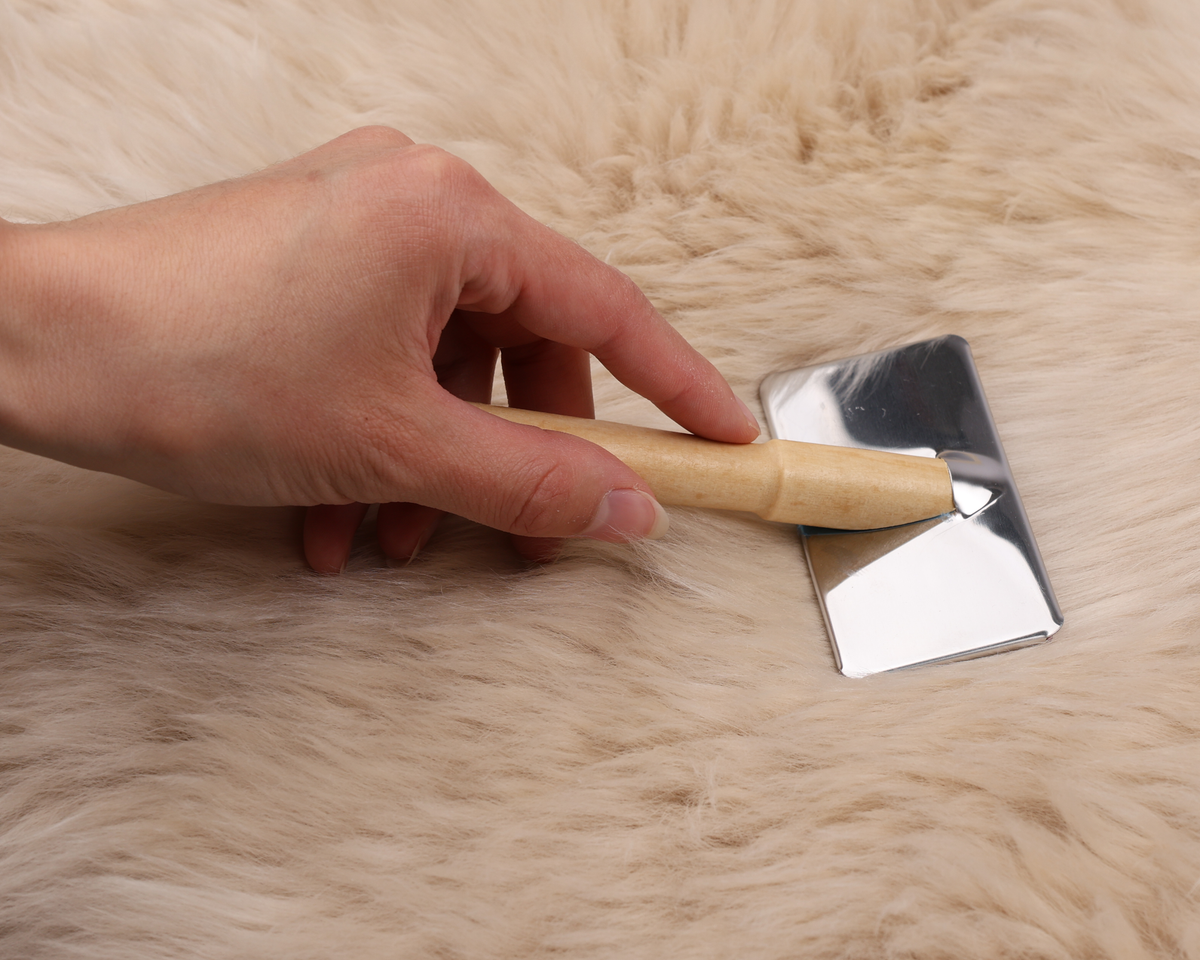
Regular brushing keeps the wool fibres separated, prevents tangling, and maintains the soft texture. For a sheepskin in regular use, once or twice a week is about right. For something more decorative that rarely gets touched, once a month is fine.
Use a sheepskin brush with wide, gentle teeth. Draw it through the wool in the direction of the fibres, not against them. Shake the sheepskin before and after.

Some wool will come away on the brush, particularly with a newer sheepskin. This is completely normal — it is loose surface fibre, not a sign that the hide is deteriorating.
One important exception: do not brush Tibetan or Gotland sheepskins. Their curly, textured pile is what makes them distinctive, and brushing straightens and damages those curls permanently. For these types, shaking and airing are all you need for routine maintenance.
Spot cleaning
For most day-to-day marks and spills, spot cleaning is all you need — and it carries none of the risks that come with washing the whole piece.
Dampen a clean cloth and work a small amount of wool detergent with lanolin gently onto the affected area. Blot rather than rub. The lanolin cleans without stripping the natural oils from the wool, and conditions the leather side of the hide at the same time. Rinse the cloth and blot again to lift any detergent residue, then leave to air dry away from direct heat.
For most people, spot cleaning combined with regular shaking and occasional airing is everything their sheepskin will ever need.
The washing question
This is where it gets specific — and where the type of sheepskin you have matters considerably.
New Zealand sheepskin
New Zealand sheepskins are chrome-salt tanned, which gives the leather more resilience than other types. Machine washing is technically possible — on a delicate or wool cycle at 20–30 degrees, with a lanolin-based detergent — but we would only recommend it as a last resort, for heavy soiling that spot cleaning cannot address. Even at low temperatures, machine washing puts real stress on the leather and wool. The hide can stiffen and the wool can lose its softness. Most sheepskins do not fully recover. Use it sparingly, if at all.
Icelandic, English, Tibetan and Gotland sheepskin
Do not machine wash these. The leather is not processed in the same way as New Zealand sheepskin, and even a gentle cycle will cause the hide to harden and crack. The damage is irreversible. Spot cleaning and airing are the right approach for all of these types.

Baby sheepskin
Baby sheepskins are the exception. They are processed using medicinal tanning rather than chrome-salt or aluminium-salt methods, which makes them genuinely machine washable. A gentle or wool cycle at low temperature with a mild detergent is fine. This is one of the reasons baby sheepskins work so well for infants — they can be cleaned thoroughly without risk.
A quick reference
| Type | Shake | Brush | Spot clean | Machine wash |
|---|---|---|---|---|
| New Zealand | Yes | Yes | Yes | Last resort only |
| Icelandic | Yes | Yes | Yes | No — leather will crack |
| English | Yes | Yes | Yes | No — leather will crack |
| Tibetan | Yes | No | Yes | No — leather will crack |
| Gotland | Yes | No | Yes | No — leather will crack |
| Baby | Yes | Yes | Yes | Yes |
What you need
Two things cover most sheepskins: a good brush and the right detergent. We make both, available separately or as a care bundle.
The sheepskin brush is designed for natural wool — wide-toothed and gentle enough not to pull the fibres, but firm enough to work through a dense pile.
The lanolin wool detergent is dermatologically tested and ecologically certified. The lanolin cleans without stripping and conditions the leather at the same time — something an ordinary detergent cannot do.
Looked after properly, a sheepskin will stay in excellent condition for ten years or more. The routine is simple once it becomes habit.
Read more

Real Sheepskin vs Faux: Why Natural Always Wins
Real sheepskin vs faux — an honest comparison covering animal welfare, environmental impact, performance and longevity. What most product pages won't tell you.
Read more
The Complete Guide to Buying Sheepskin
Real vs faux, what sizes to choose, how to care for it — everything you need to know before buying a sheepskin rug or throw.
Read more