



Real Sheepskin vs Faux: Why Natural Always Wins
If you are comparing real and faux sheepskin, you are probably weighing up more than price. Quality, longevity, environmental impact, and animal welfare all come into it. This article tries to give you an honest picture of both, rather than the version most product pages offer.
The animal welfare question
It is worth addressing directly. Faux sheepskin is animal-free, and for people who choose not to use animal products, that matters. There is nothing to argue with there.
What is less widely understood is that real sheepskin is always a by-product of the meat industry. The animal is never raised or slaughtered for its hide — the hide would otherwise go to waste at the abattoir. Using it is the more complete use of an animal that has already entered the food chain. Leaving it unused does not save the animal; it means the hide goes to landfill or incineration instead.

This does not resolve the question for everyone. But for many people who care about waste and environmental impact, it changes the calculation.
What faux sheepskin is actually made of
Faux sheepskin looks like wool. It is not. It is typically polyester or acrylic — synthetic fibres derived from petroleum. Manufacturing it requires fossil fuels, produces emissions, and results in a product that does not biodegrade. When washed, it sheds microplastic fibres that pass through wastewater treatment and enter waterways.
Natural sheepskin is wool and leather, both biodegradable materials used by humans for thousands of years without accumulating in the environment. When a real sheepskin reaches end of life, it decomposes. A polyester rug does not.
The environmental case for faux sheepskin as the more ethical choice is, on closer examination, not straightforward. Choosing plastic over a natural by-product in the name of animal welfare is a trade-off worth thinking through carefully.
How they perform differently in use
In a photograph, a good faux sheepskin can be hard to distinguish from a real one. In use, the differences come through quickly.
Temperature regulation. Natural wool fibres are hollow. This creates a layer of air that insulates in winter and allows moisture and heat to escape in summer. Synthetic fibres cannot replicate this. A real sheepskin stays comfortable across seasons; a faux one tends to feel warm and slightly clammy when the temperature rises.
The feel underfoot. The hollow fibres and natural loft of wool create a responsive, cushioned feel when you sit or lie on a sheepskin — particularly noticeable on hard chairs or wooden floors. Faux sheepskin compresses in a flat, uniform way that does not have the same quality.
Longevity. Real sheepskin, cared for properly, will last ten years or more. Faux sheepskin mats under regular use, loses its pile, and cannot be restored. The lower upfront cost rarely holds up over time.
Hypoallergenic properties. Lanolin — the natural oil in wool — resists bacteria, dust mites, and mould. This makes real sheepskin well suited to people with allergies and to use around children. Synthetic fibres do not have this property.
Where faux makes sense
There are situations where faux sheepskin is a reasonable choice. For purely decorative use where a piece will rarely be touched or cleaned — a prop, a temporary styling element — the lower cost makes sense. For someone whose values mean they will not use animal products, that position is entirely coherent.
But for a rug or throw that will be sat on, slept under, used by children, or expected to last — the case for natural is strong, and the environmental argument for faux is weaker than it first appears.
A note on sourcing
Not all real sheepskin is equal. At NaturesCollection, all hides come from animals raised for meat, from farms that meet our welfare standards. We source from New Zealand rather than Australia because New Zealand has no mulesing — a welfare practice worth knowing about if origin matters to your decision.

Every sheepskin we sell is a by-product, not a primary product. If you have questions about where a specific piece comes from or how it is processed, we are happy to answer them.
Read more
Are Sheepskins Sustainable? An Honest Look at Natural Wool Products
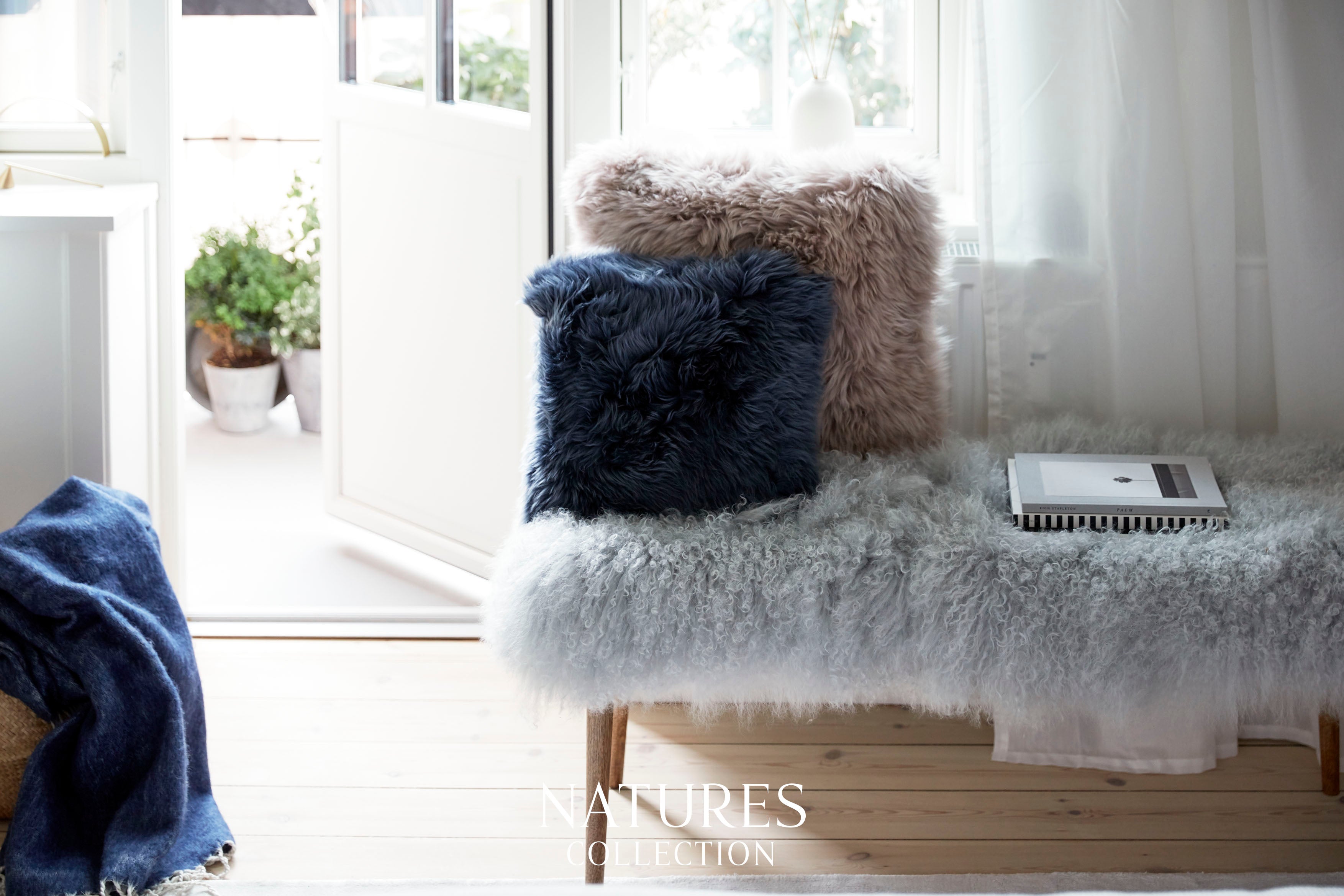
It is a fair question. If you care about what you bring into your home, you should ask it about everything — sheepskin included. The honest answer is that sheepskin sits in an unusual position: it ...
Read more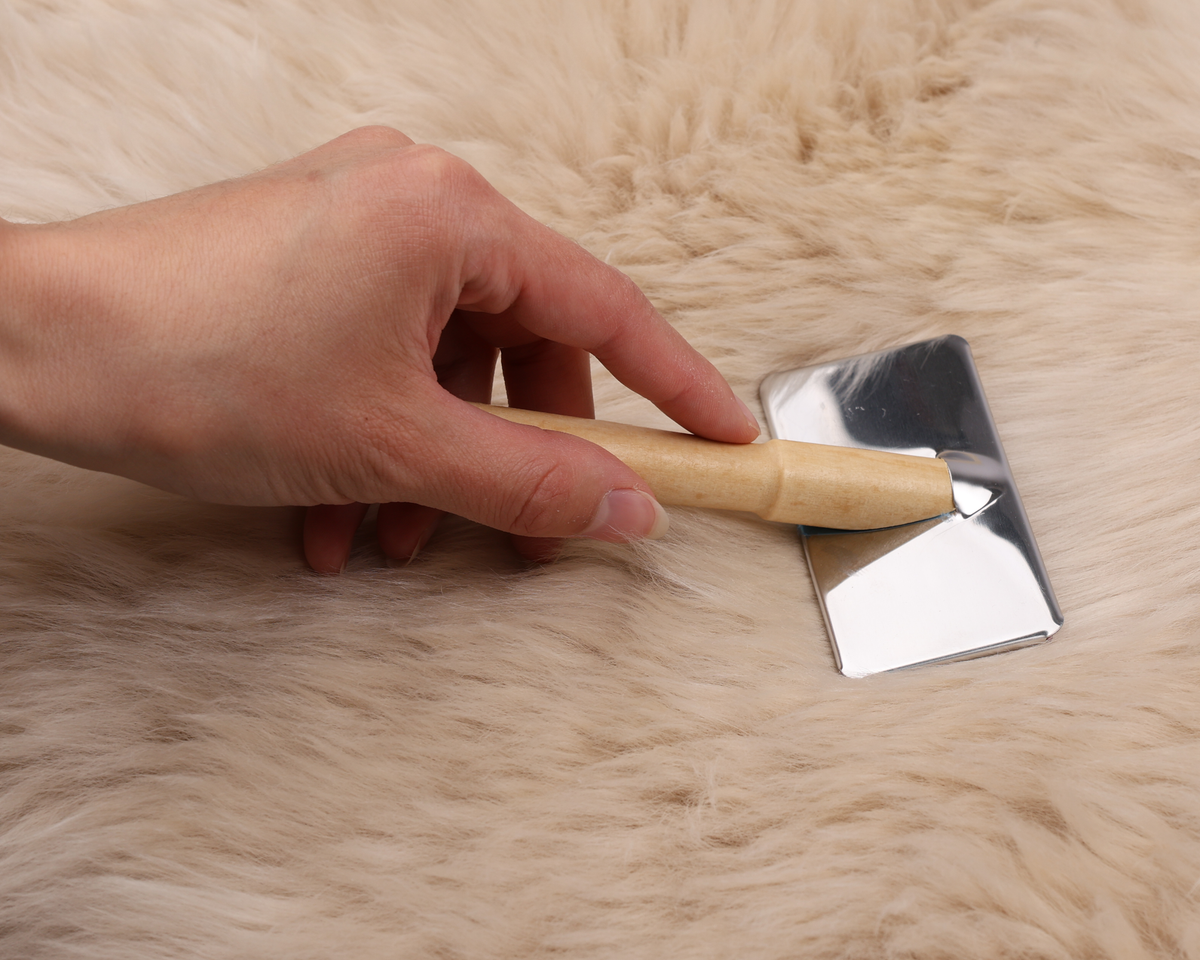
How to Clean and Care for Your Sheepskin Rug or Throw
How to clean and care for a sheepskin rug or throw — the right approach for every type, from New Zealand to Icelandic, Tibetan, Gotland and baby sheepskin.
Read more