


The Best Natural Materials for a Cosy Winter Home
Warmth in a winter interior is as much a material quality as it is a matter of heating. Rooms that feel genuinely cosy share a specific set of characteristics: tactile surfaces, natural fibres, materials that absorb and diffuse rather than reflect. For designers working on residential schemes with a winter brief, understanding which materials deliver that quality — and why — is more useful than following trend-led lists.
This article covers the natural materials that perform best in winter schemes, with particular attention to wool and sheepskin. Contact details are at the end if you want to discuss a project.
What makes a material feel warm
The perception of warmth in a room is partly thermal and partly visual. Hard, reflective surfaces — polished stone, glass, gloss-painted walls — read as cold regardless of the ambient temperature. Soft, light-absorbing surfaces read as warm. Natural fibres sit firmly in the second category.
Wool is particularly effective because its thermal properties are real, not just visual. The hollow fibre structure traps air, insulating the body from cold surfaces and regulating temperature in both directions. A client sitting on a sheepskin seat pad, or resting against a wool cushion, is experiencing genuine thermal benefit — not just a styling choice.
This matters for how you brief clients on natural material selections. The specification has a functional justification that synthetic alternatives cannot make.
Sheepskin
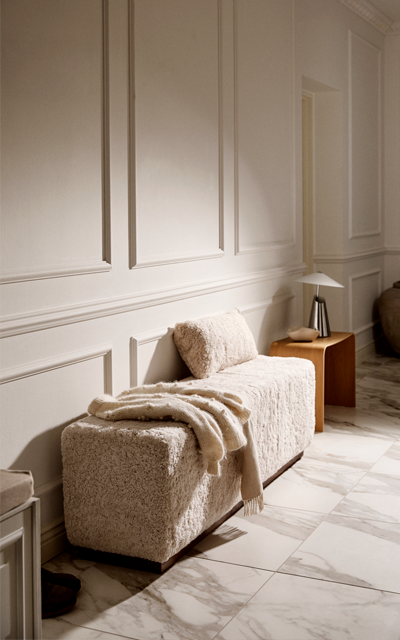
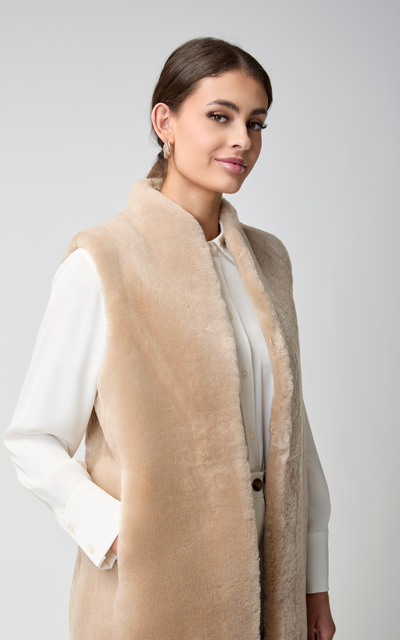
Sheepskin is one of the highest-performing natural materials for winter interiors. The pile depth, the lanolin content of the wool, and the temperature-regulating hollow fibre structure combine to create a material that is genuinely warm to the touch and warm to sit on. Unlike most textiles, it does not feel clammy when warm — the moisture-wicking properties of wool prevent the heat-trapping effect that synthetic fleece and some cottons produce.
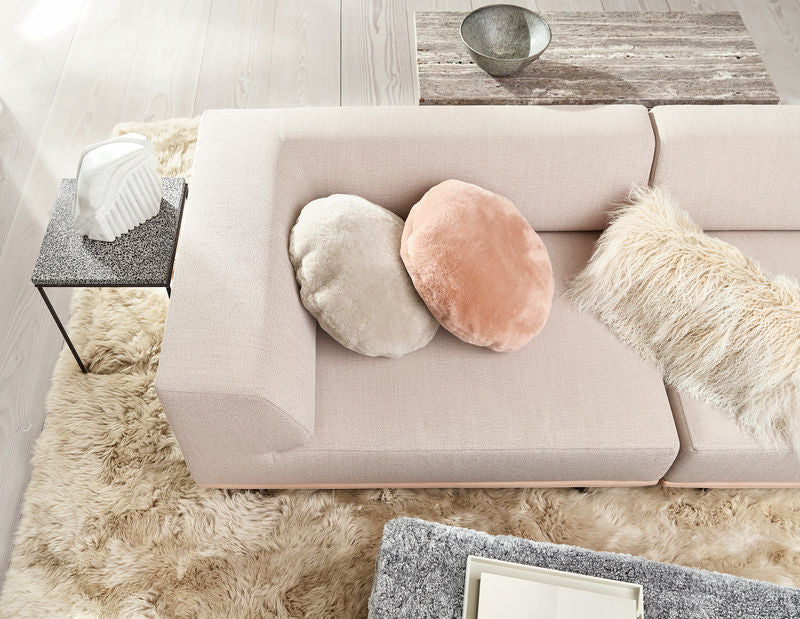
For floor use in a winter scheme: a double or quad New Zealand long-wool skin under a seating arrangement adds a layer of insulation between the occupants and a cold floor that a conventional rug does not provide to the same degree. This is particularly relevant in older properties with stone, tile, or uninsulated timber flooring.
For furniture: sheepskin seat pads on dining chairs, a skin draped over a reading chair, a throw at the foot of the bed. These are applications where the thermal benefit of the material is experienced directly and repeatedly by the client.

Wool
Beyond sheepskin, woven and knitted wool textiles are the other essential material in a winter scheme. Upholstery in wool or wool-blend fabrics, wool throws, wool cushion covers — each adds to the overall thermal and visual warmth of the room.
Wool pairs exceptionally well with sheepskin because the materials share the same base fibre; they read as part of the same material family without being identical. A wool upholstered sofa with a sheepskin throw over one arm is a coherent, layered specification — the contrast is in surface quality rather than material origin.
Linen and cotton (with caveats)
Linen and cotton are natural materials that contribute texture and work well in layered schemes, but their thermal performance is more limited. A linen cushion cover or a cotton throw adds to the visual warmth of a room; it does not add meaningful thermal insulation. In a winter scheme, they are best used as a base layer that heavier wool and sheepskin elements sit over, rather than as the primary textiles.
Heavier linen — Belgian linen, washed linen in a mid-to-heavy weight — reads warmer than lightweight cotton and works better as a year-round specification that does not need to be changed for winter.
Timber and cork
On floors and surfaces, timber and cork both read and feel warmer than stone or tile, and both work well as a base for the textile layers above. If the project allows for flooring specification, wide-plank oak or walnut with a natural oil finish provides the right visual warmth and a surface that pairs well with natural-fibre rugs. Cork, underused in contemporary residential design, has excellent insulation properties and a warm, matte surface quality.
What to avoid in a winter brief
Polished surfaces, cool-toned metallics, and pale grey neutrals without warm undertones all work against the brief. They are not wrong choices in themselves, but they require more corrective work in the textile and furniture selection to achieve genuine warmth. If the budget is tight and the brief is warmth, concentrate the natural material specification in the pieces that get the most body contact: floor rugs, seat pads, throws, and cushions. These deliver the most noticeable result per pound spent.
Working with us on a project
We supply sheepskin rugs, throws, seat pads, and cushions directly to designers and can advise on material selection for specific scheme requirements. For winter briefs where you want to discuss pile types, quantities, or lead times, get in touch.
Email: hello@naturescollection.eu
Phone: +45 75 80 10 50
Read more
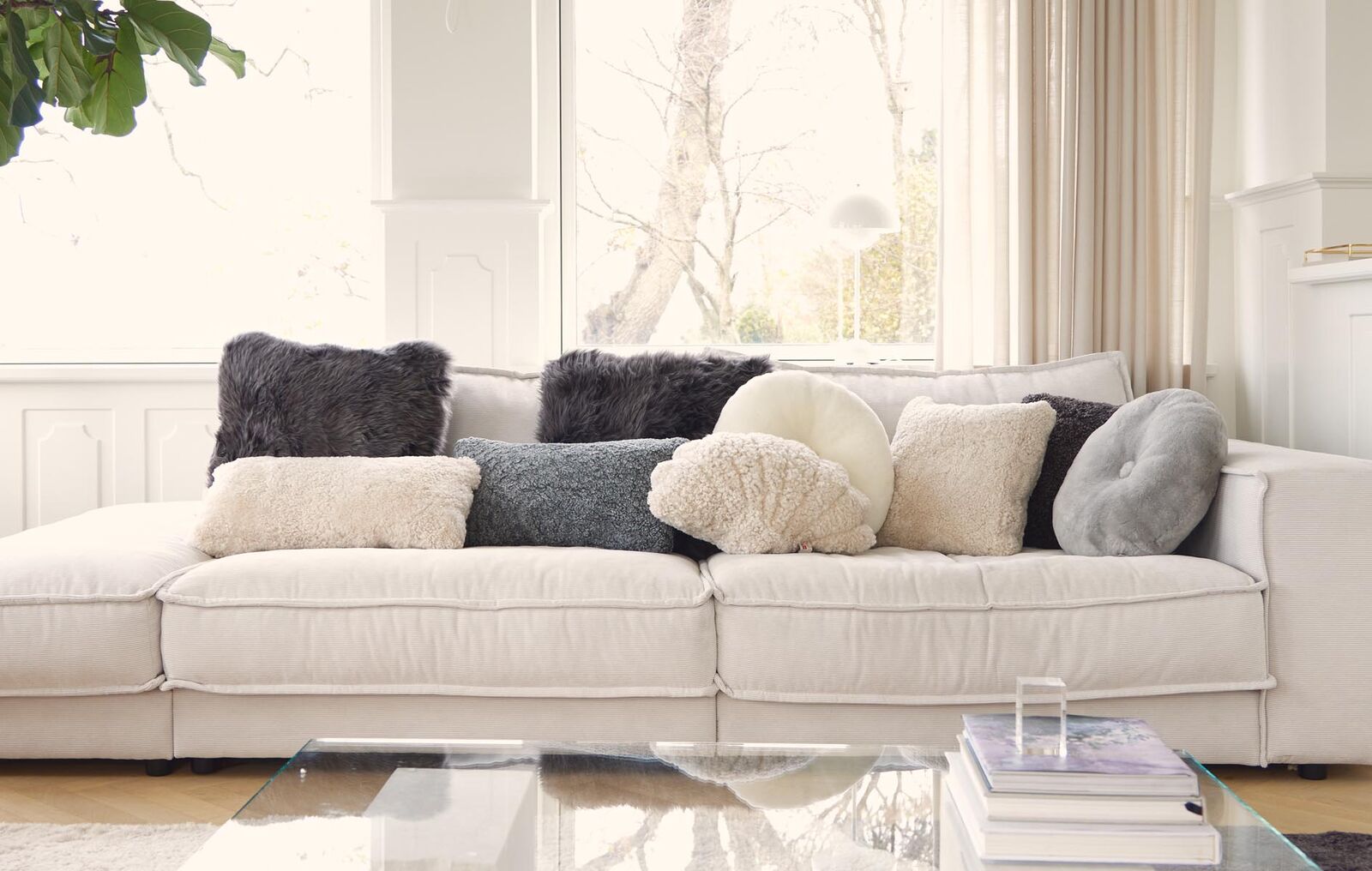
Sheepskin Cushions: How to Choose the Right Size and Style
A sheepskin cushion is a more considered specification than it might appear. The pile type, backing, and size all affect how the cushion reads in the room and how it performs over time. Getting tho...
Read more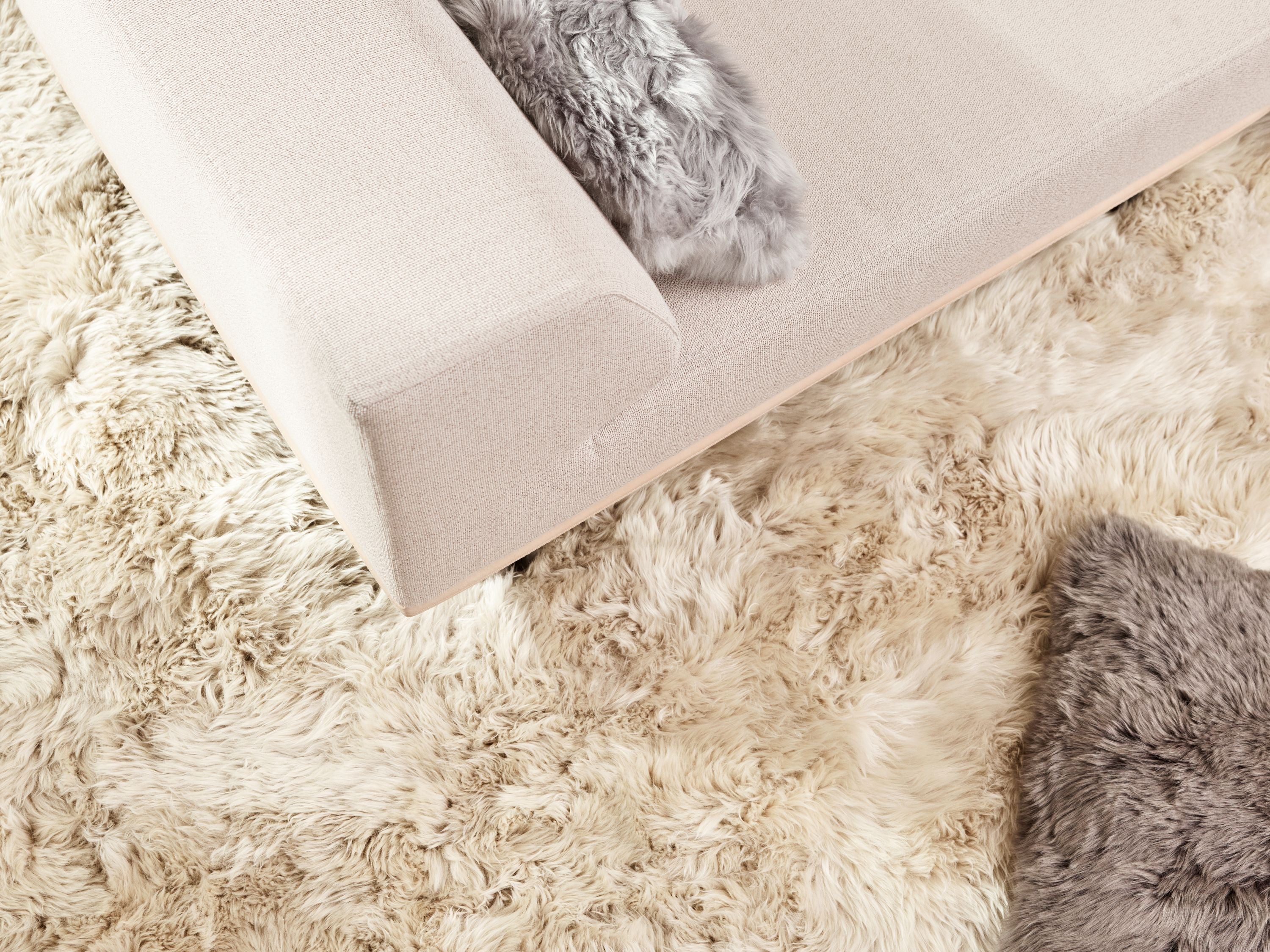
How to Layer Textiles in a Minimalist Interior
Layering textiles in a minimalist interior is a problem of calibration. Add too little and the room reads as unfinished; add too much and the restraint that defines the scheme disappears. Natural m...
Read more