


How to Layer Textiles in a Minimalist Interior
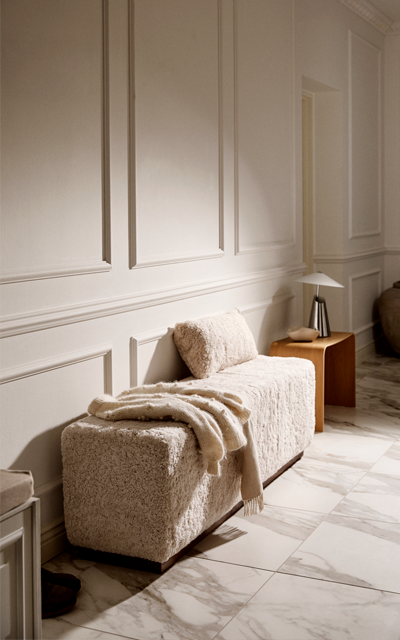
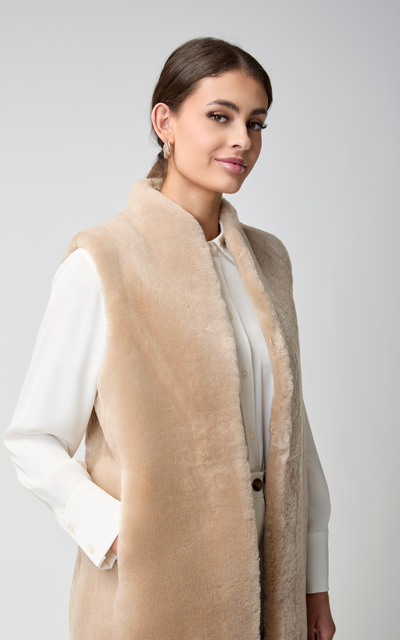
Layering textiles in a minimalist interior is a problem of calibration. Add too little and the room reads as unfinished; add too much and the restraint that defines the scheme disappears. Natural materials — sheepskin among them — are particularly useful here because they add visual depth and tactile warmth without introducing pattern or strong colour.
This is written for designers working on residential schemes where the brief calls for warmth within a pared-back aesthetic. If you want to discuss specific applications or project quantities, contact details are at the end.
Why natural materials layer well in minimal schemes
Minimalist interiors rely on surface quality and material character to carry the visual interest that pattern and colour provide in more eclectic schemes. A room with white walls, pale oak flooring, and linen upholstery has plenty of tonal subtlety — but without textural variation, it can read as cold or under-resolved.

Natural fibres — wool, linen, jute, cotton — introduce variation through the material itself rather than through applied decoration. Sheepskin, in particular, has a depth and irregularity that no synthetic can replicate; the way it catches light changes across the day, and the natural variation between individual hides means no two pieces are identical. In a minimal scheme, that kind of quiet complexity is exactly what prevents the room from feeling sterile.
The principle of contrast
Effective textile layering depends on contrast — not of colour, but of surface quality and weight. The combinations that work best pair materials with genuinely different properties: a flat weave against a deep pile, a smooth leather against a coarse wool, a dense knit against a fine linen.
Pile on pile rarely works. A sheepskin throw over a chunky bouclé sofa creates visual noise rather than depth. The same sheepskin over a smooth linen or tight-weave wool sofa reads clearly and adds to the scheme rather than competing with it.
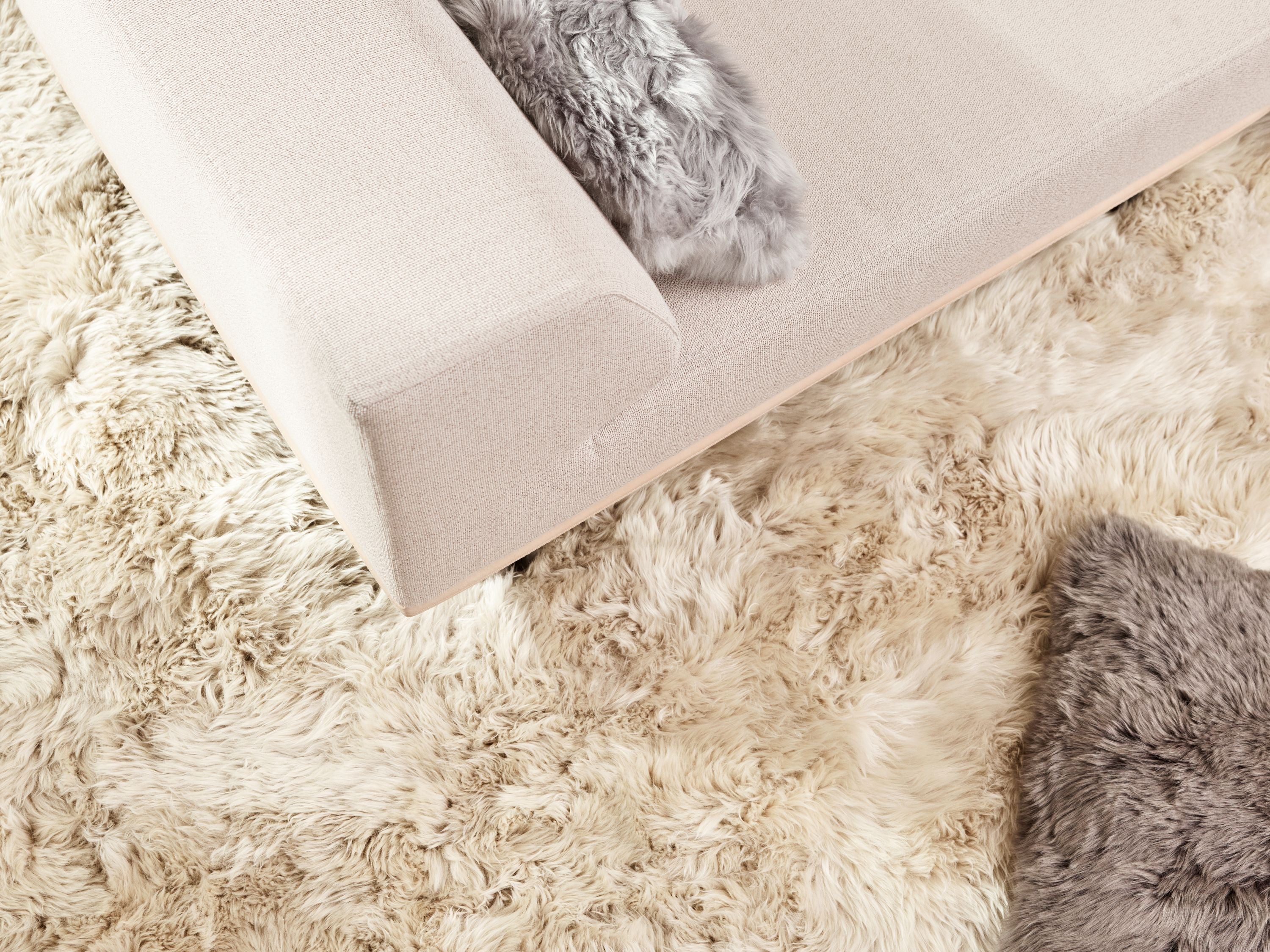
The same logic applies to rugs. A sheepskin layered over a flat-woven jute or cotton rug creates a defined textural contrast. Both materials are natural, both are tonally quiet, but their surface qualities are different enough that the eye reads each one separately.
Scale and proportion in layering
In a layered arrangement, the base textile should be larger and flatter, and the layered piece should be smaller and have more character. A large flat-weave rug with a single sheepskin placed on it works. The reverse — a large sheepskin with something smaller and flatter on top — tends to look unintentional.

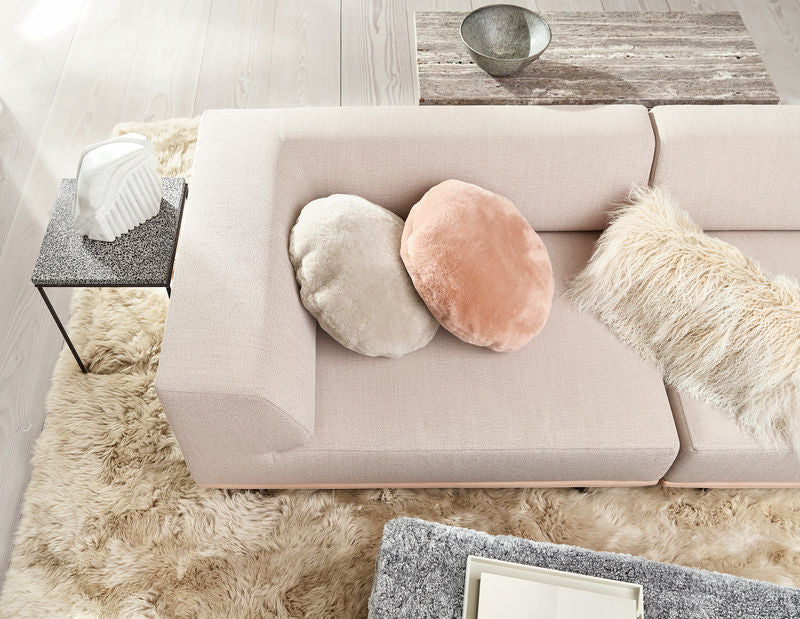
The same applies vertically: a fine linen throw with a small Tibetan sheepskin folded over one arm of a sofa is a considered detail. A full sheepskin draped over the entire sofa, with a throw added on top, starts to look like an inventory rather than a scheme.
Specific applications
On the floor. A single or double sheepskin over a flat-woven base rug anchors a seating arrangement in a living room. In a bedroom, a skin placed alongside the bed introduces warmth without a rug-within-a-rug effect if sized appropriately.
On seating. A sheepskin draped over one arm or the back of an upholstered chair adds tactile interest at the most visible point of the piece. On a dining chair, a seat pad or a skin draped over the back introduces warmth without changing the silhouette of the chair significantly.
On the bed. A skin placed at the foot of the bed, over clean linen or a fine wool blanket, adds a layer of texture that reads clearly from the room entrance — which is where the composition of a bedroom is typically judged. Keep the rest of the bed simple.
On walls. A Gotland or Tibetan skin mounted on a wall functions as a textile artwork in a minimal scheme. It introduces texture and a natural reference point without requiring a frame or a picture hanging system. In rooms with hard floors and high ceilings, the acoustic benefit is worth noting to clients.
Colour in a neutral palette
For most minimalist schemes, natural undyed skins — the off-whites, creams, and greiges of Icelandic and English sheepskin — are the lowest-risk specification. They integrate into almost any neutral palette and read as organic rather than decorative.
Dyed New Zealand skins in darker tones — charcoal, slate, mocha — are useful when the scheme needs grounding, or when the sheepskin is meant to provide a subtle tonal anchor rather than a neutral texture. They require more care in placement but can add considerable resolution to a palette that might otherwise read as flat.
Working with us on a project
If you are speccing natural textiles for a minimalist scheme and want to discuss which pile types and colours suit specific applications, we are happy to advise. We supply designers directly and can assist with project quantities.
Email: hello@naturescollection.eu
Phone: +45 75 80 10 50
Read more
The Best Natural Materials for a Cosy Winter Home
Warmth in a winter interior is as much a material quality as it is a matter of heating. Rooms that feel genuinely cosy share a specific set of characteristics: tactile surfaces, natural fibres, mat...
Read more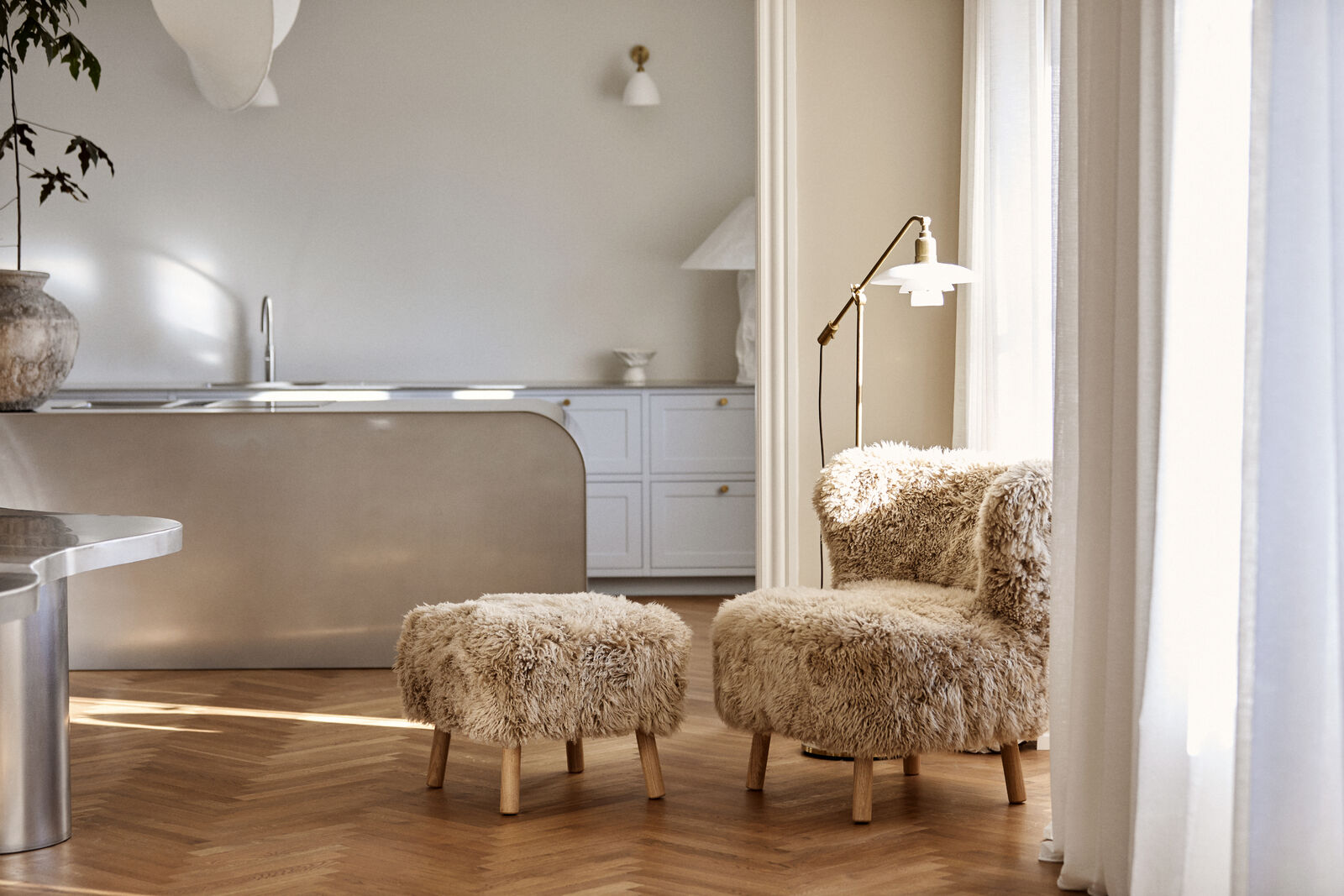
How to Style a Sheepskin Rug in Your Living Room
A sheepskin rug is one of the more forgiving elements to work with in a living room scheme. It introduces natural texture and warmth without the commitment of a pattern, and it layers well over alm...
Read more