


How to Style a Sheepskin Rug in Your Living Room
A sheepskin rug is one of the more forgiving elements to work with in a living room scheme. It introduces natural texture and warmth without the commitment of a pattern, and it layers well over almost any existing flooring. Getting the most from it, though, depends on a few considered decisions around scale, placement, and pile type.
This is written for designers speccing sheepskin into a client project. If you are sourcing for a specific scheme and want to talk through options, our trade team is available — details at the end.
Scale first
Undersizing is the most common mistake, and it is more visible with sheepskin than with conventional rugs because the organic shape draws the eye. A single hide — roughly 90–110 cm — works well as an accent piece or layered over a larger flat-weave, but as the primary rug in a living room seating arrangement, it will almost always read as insufficient.
For a standard living room, a double (two hides) is the practical minimum. A quad gives you the footprint to anchor a full seating group and creates the kind of visual weight that reads well in photography as well as in person — worth considering if the project has a documentation requirement. For larger or open-plan spaces, multi-hide configurations are available to order; contact us to discuss bespoke sizing.
Placement
In a traditional arrangement — sofa and two chairs around a coffee table — the rug should sit under the front legs of all seating pieces at minimum. Full under-furniture placement creates a more grounded, intentional look, but front-leg placement is acceptable and gives the rug more visual presence by keeping more of it visible.

In open-plan schemes, sheepskin can define a seating zone effectively without the hard edge of a conventional bordered rug. The organic perimeter of a multi-hide piece works with the informality of open-plan living rather than against it.
For layering — a sheepskin over a flat-woven jute, sisal, or cotton rug — position the skin centrally or slightly towards the seating end. The textural contrast between the pile and the flat base is the point; the eye needs to register both.
Pile type and interior style
The pile choice shapes the character of the room as much as the placement does.
New Zealand long-wool (5–7 cm) is the most versatile. Dense and consistent, it reads cleanly in contemporary, Scandinavian, and transitional schemes. It takes dyed colours well, which matters when working within a specific palette.
Icelandic long-wool (12–15 cm) has a looser, more undone quality — well suited to interiors that lean towards the organic or the deliberately imperfect. It comes in natural undyed tones only, so it works when the palette is neutral-led and the texture is the primary statement.
Tibetan and Gotland are decorative rather than functional as floor rugs — their curly pile structures are not designed for foot traffic. Both are better used as layering pieces draped over furniture or displayed on walls where their texture can be appreciated without wear.
Colour and palette
Natural undyed sheepskin — the off-whites, creams, and warm greys of Icelandic and English skins — integrates easily into most neutral palettes and reads as organic rather than decorative. It is the lower-risk specification for rooms where the textile is supporting rather than leading.

Dyed New Zealand skins extend the palette considerably. Darker tones — charcoal, slate, mocha — ground a room and work well against light upholstery. Lighter tones in blush, ivory, or warm white add softness. When speccing a dyed skin, bear in mind that natural variation between individual hides is part of the character; if absolute consistency across multiple pieces is required, confirm with us before ordering.
Practical considerations for client projects
Sheepskin is not suitable for very high-traffic areas — hallways or rooms with hard daily use by children or pets will put the pile under pressure faster than a living room in normal residential use. For those situations, a short-wool New Zealand skin is the most resilient option.
Care is straightforward: regular shaking, occasional brushing with a wide-toothed tool, and spot cleaning with a lanolin-based wool detergent covers most situations. Machine washing is a last resort for New Zealand sheepskin only. For Icelandic and other types, it should not be done. This is worth communicating to clients at handover.
Working with us on a project
We work directly with interior designers and supply both individual pieces and larger project quantities. If you are speccing sheepskin into a residential or hospitality scheme and want to discuss pile type, sizing, colour options, or lead times, get in touch.
Email: hello@naturescollection.eu
Phone: +45 75 80 10 50
Read more
How to Layer Textiles in a Minimalist Interior
Layering textiles in a minimalist interior is a problem of calibration. Add too little and the room reads as unfinished; add too much and the restraint that defines the scheme disappears. Natural m...
Read more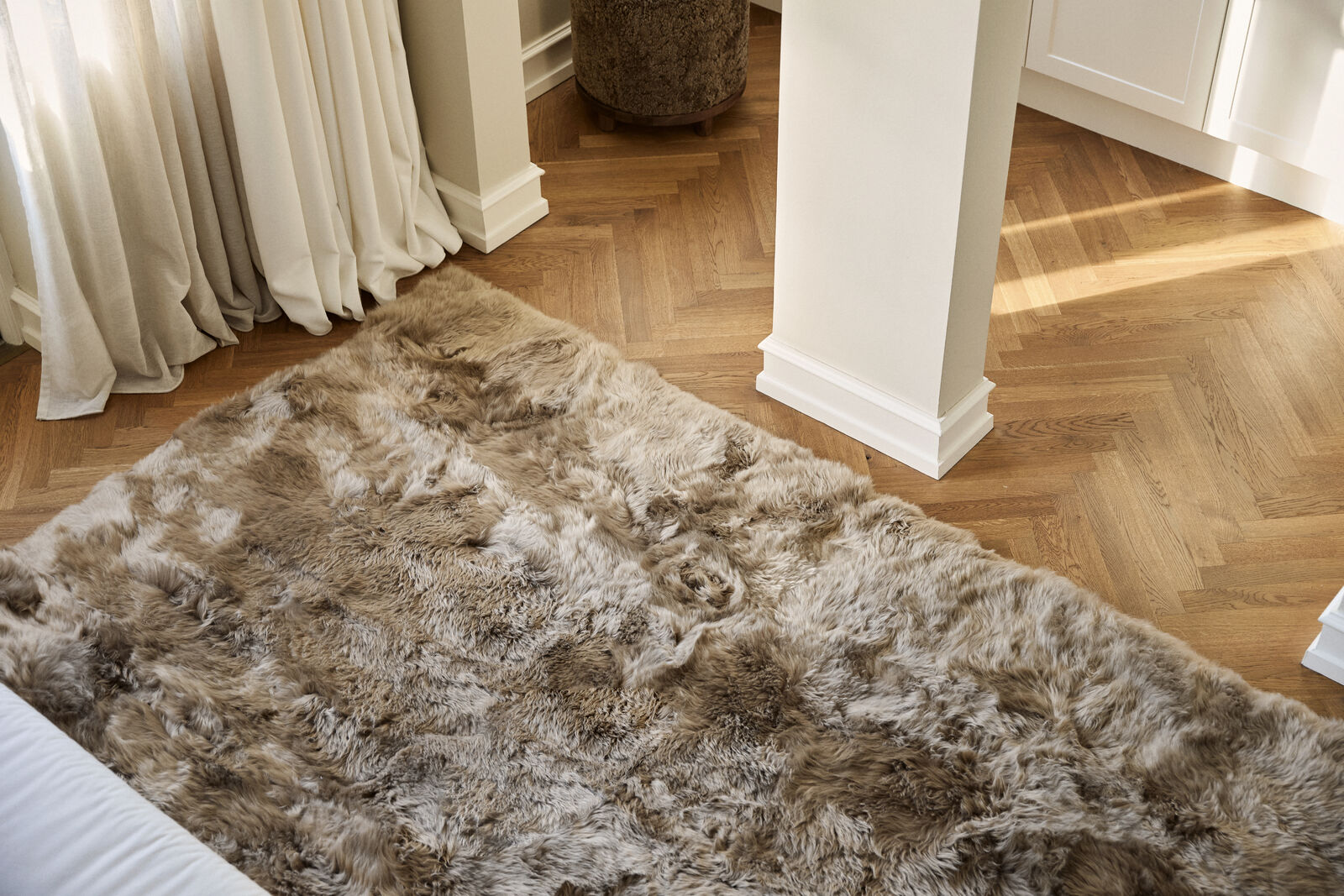
Sheepskin Throws for the Bedroom: Warmth, Style and Practicality
In a bedroom scheme, a sheepskin throw is one of the most effective ways to add tactile warmth without introducing a competing pattern or colour. It photographs well, it functions well, and it is a...
Read more