


Sheepskin Throws for the Bedroom: Warmth, Style and Practicality
In a bedroom scheme, a sheepskin throw is one of the most effective ways to add tactile warmth without introducing a competing pattern or colour. It photographs well, it functions well, and it is a specification clients reliably appreciate once they live with it. What follows covers the decisions that matter when choosing the right skin for a bedroom application.
If you are sourcing for a current project and want to discuss specific options, contact details are at the end of this article.
Position and scale
The two standard positions are at the foot of the bed and alongside it. Both work differently.
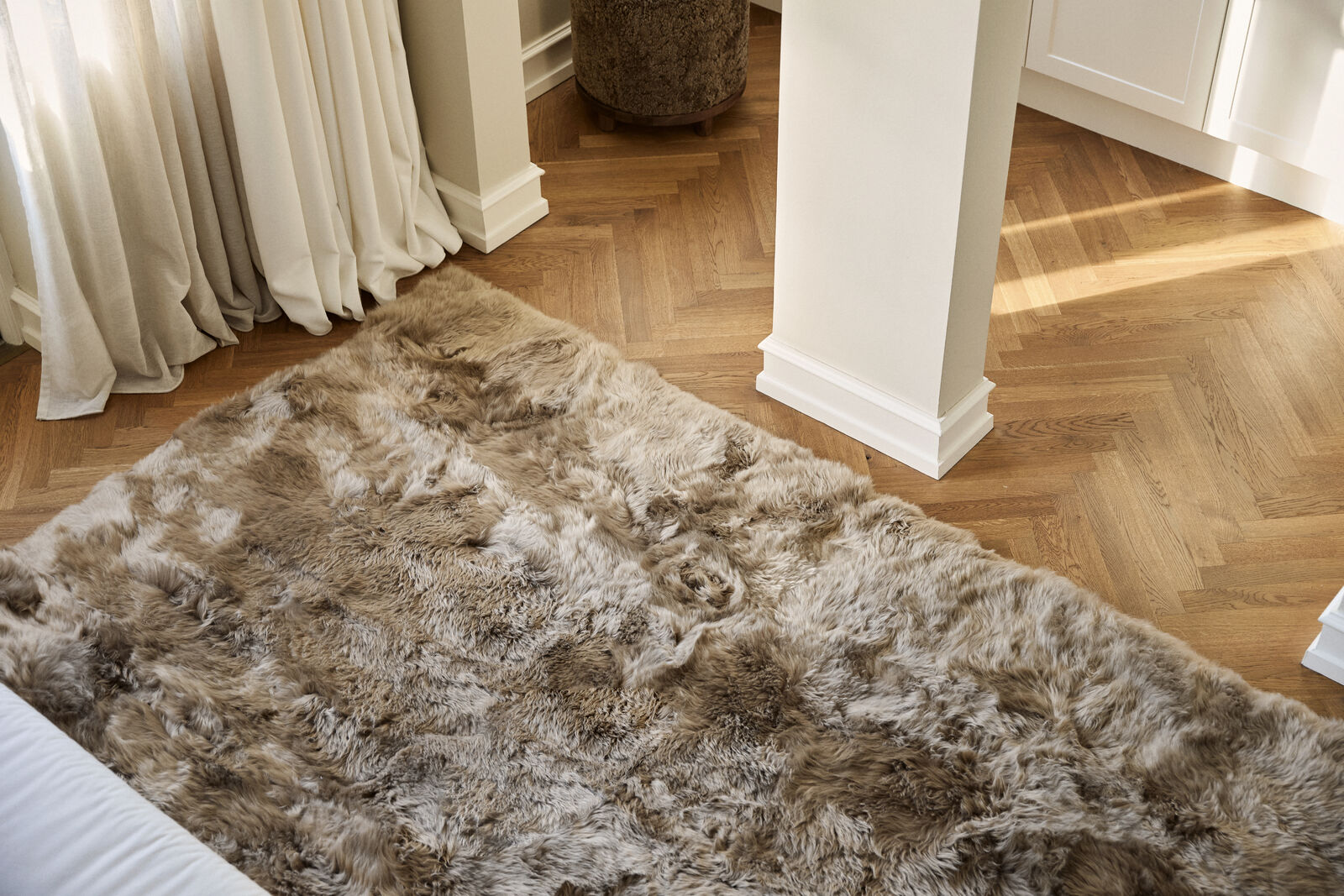
At the foot of the bed, a sheepskin is visible from the room's natural sightline and contributes to the overall composition of the scheme. A single hide is usually sufficient for a double or king-size bed — it does not need to span the full width; placed centrally, it creates a considered accent. A double skin works well for a super-king or where the client wants a more substantial visual presence.
Alongside the bed, the skin is experienced primarily as a tactile element rather than a visual one — the first thing underfoot on a cold morning. A single skin in a natural colour is the typical specification here. The texture and warmth are the point; it does not need to be visible from across the room.

Both positions can be used simultaneously in a principal bedroom, particularly if the scheme is layering multiple natural textures.
Pile type for bedroom use
New Zealand long-wool is the most practical choice for most bedroom applications. The pile depth (5–7 cm) gives a generous, tactile quality, and the consistency of the wool means it holds its appearance well. Available in dyed colours, which matters when working within a specific palette.
Icelandic long-wool (12–15 cm) is the more dramatic option. The looser, deeper pile reads as luxurious and has a naturally undone quality that works well in bedrooms aiming for a relaxed, organic aesthetic. Natural colours only — creams, greys, warm whites. Not suited to high foot-traffic bedroom positions; better at the foot of the bed than on the floor beside it.
Tibetan is a considered choice for a bedroom throw used purely as a decorative layer at the foot of the bed — its soft, open curl and light weight work well draped over linen or fine wool bedding. It is not intended for floor use or frequent repositioning.
Textile layering in the bedroom
Sheepskin layers well with linen, waffle-weave cotton, and fine merino blankets. The contrast between the wool pile and a flat-woven or smooth textile base is what creates visual depth — pile on pile (a sheepskin over a chunky knit, for example) tends to compete rather than complement.
In terms of colour, natural undyed skins integrate easily into almost any palette. A cream or warm-white Icelandic or English skin against mid-grey linen is a reliable combination. Dyed New Zealand skins — charcoal, slate, blush — give more palette specificity and suit schemes where the throw is contributing a defined tone rather than a neutral texture.
Client handover notes
For bedroom throws, care is simple: shake out regularly, spot clean as needed, and air occasionally away from direct sunlight. The skin does not need frequent washing — and for Icelandic and Tibetan types, machine washing will damage the hide irreversibly. Worth including in client documentation.
Working with us on a project
We supply designers directly and can advise on pile type, sizing, and colour for specific scheme requirements. For project quantities or bespoke sizing, contact us before ordering.
Email: hello@naturescollection.eu
Phone: +45 75 80 10 50
Read more
How to Style a Sheepskin Rug in Your Living Room
A sheepskin rug is one of the more forgiving elements to work with in a living room scheme. It introduces natural texture and warmth without the commitment of a pattern, and it layers well over alm...
Read more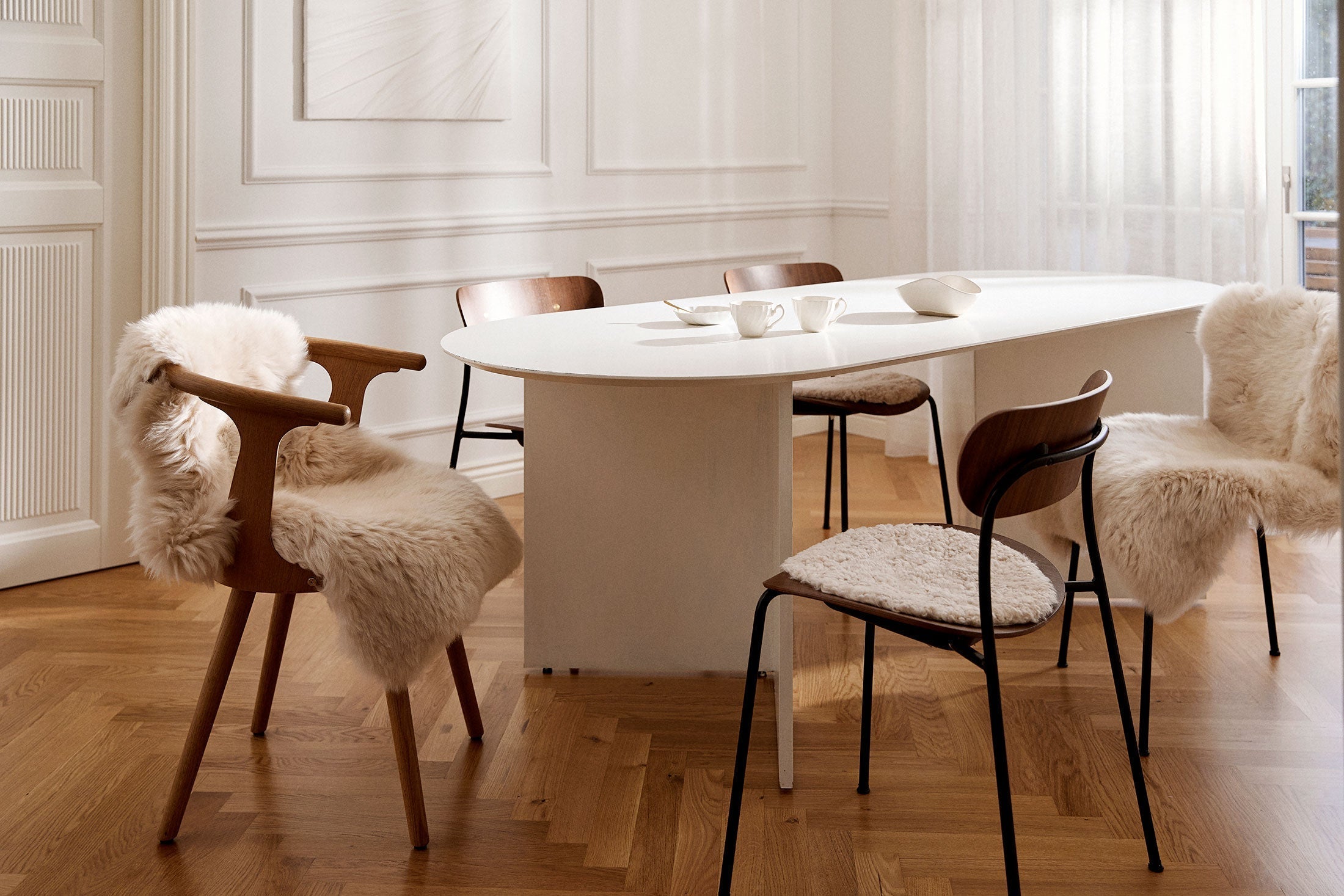
Sheepskin Seat Pads: The Scandinavian Secret to Comfortable Dining Chairs
Sheepskin seat pads on dining chairs have been standard in Scandinavian residential design for decades — not as a styling flourish but as a practical response to the discomfort of hard wooden seati...
Read more